Multi-year UX partnership designing Bito's AI dev tool
As Bito's embedded design partner for 3 years, Redbrix shaped the UX of their AI developer tool, now used by over 150,000 developers monthly.
bito.ai
bito.ai
About client
Bito is an AI-native developer tool built to speed up coding workflows. It integrates directly into IDEs and CLIs to support code generation, review, explanation, and debugging. The product scaled rapidly alongside our partnership, from early launches to serving over 150,000 developers each month and processing more than 30 million AI requests.
Industry
Developer Tools, AI, Productivity SaaS
Services we provided
– Product architecture
– UI design
– UX design and interactions
– Design system
– UI design
– UX design and interactions
– Design system
Challenge
When Redbrix joined, Bito's early UI came from a legacy internal system. The main challenge was to build a design foundation sturdy enough to carry a product that was still figuring out what it wanted to be, then keep building on that foundation as Bito evolved from a collaboration tool into a full AI development platform. Each phase brought new constraints: IDE real estate is limited, developers are unforgiving users, and by Phase 3 we were designing inside pure Markdown.
Solution
We built Bito's design system from scratch and stayed embedded in the product through every feature launch and pivot over 3 years. Our approach was grounded in direct conversations with developers at each stage, turning what we heard into concrete interaction decisions rather than general UX principles.
Phase 1: designing a collaborative dev tool (2022)
Redbrix was brought in at a formative stage to help shape Bito's early experience. We worked closely with the founders to turn concepts into testable prototypes, building the design system and interaction logic that would carry the product forward.
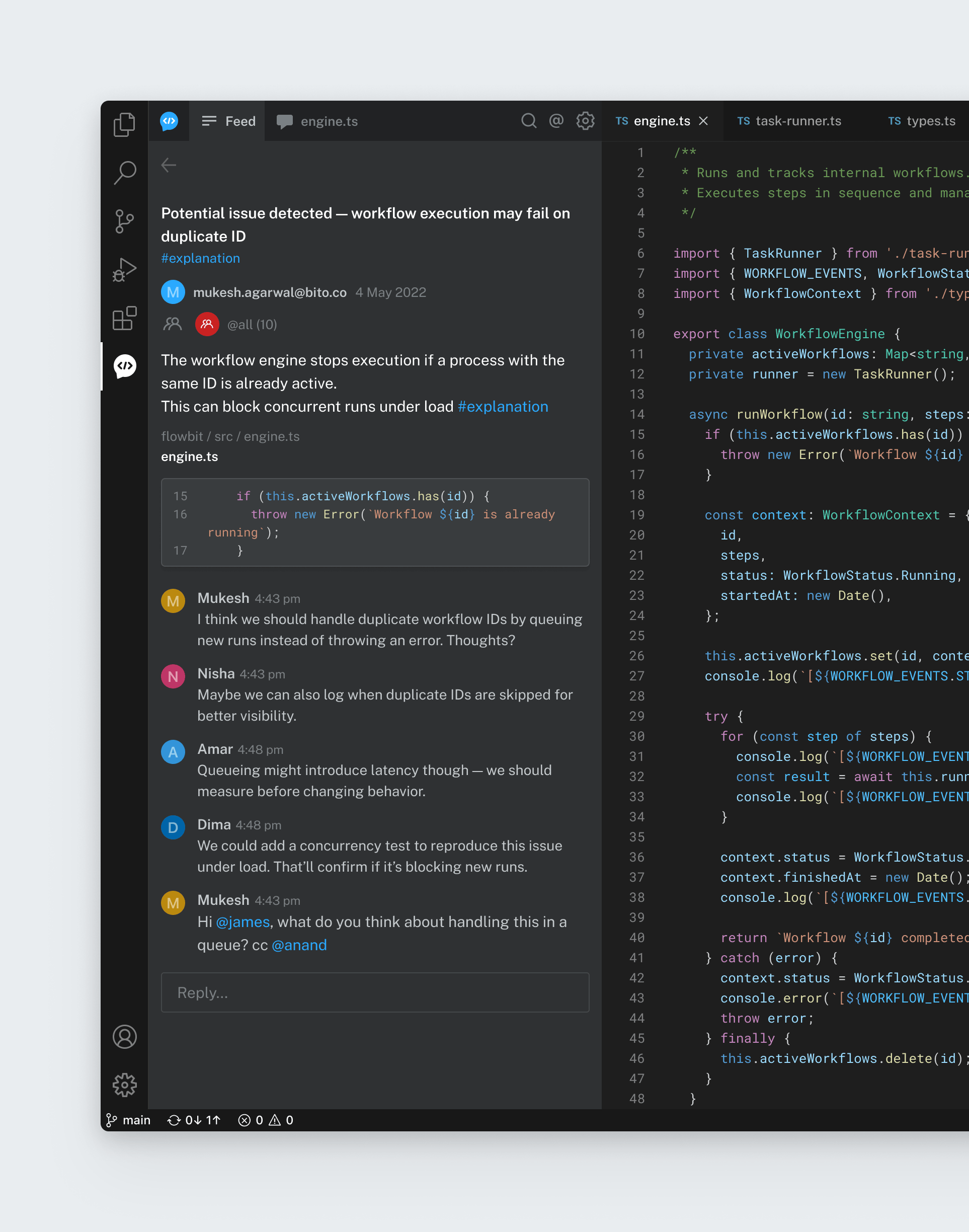
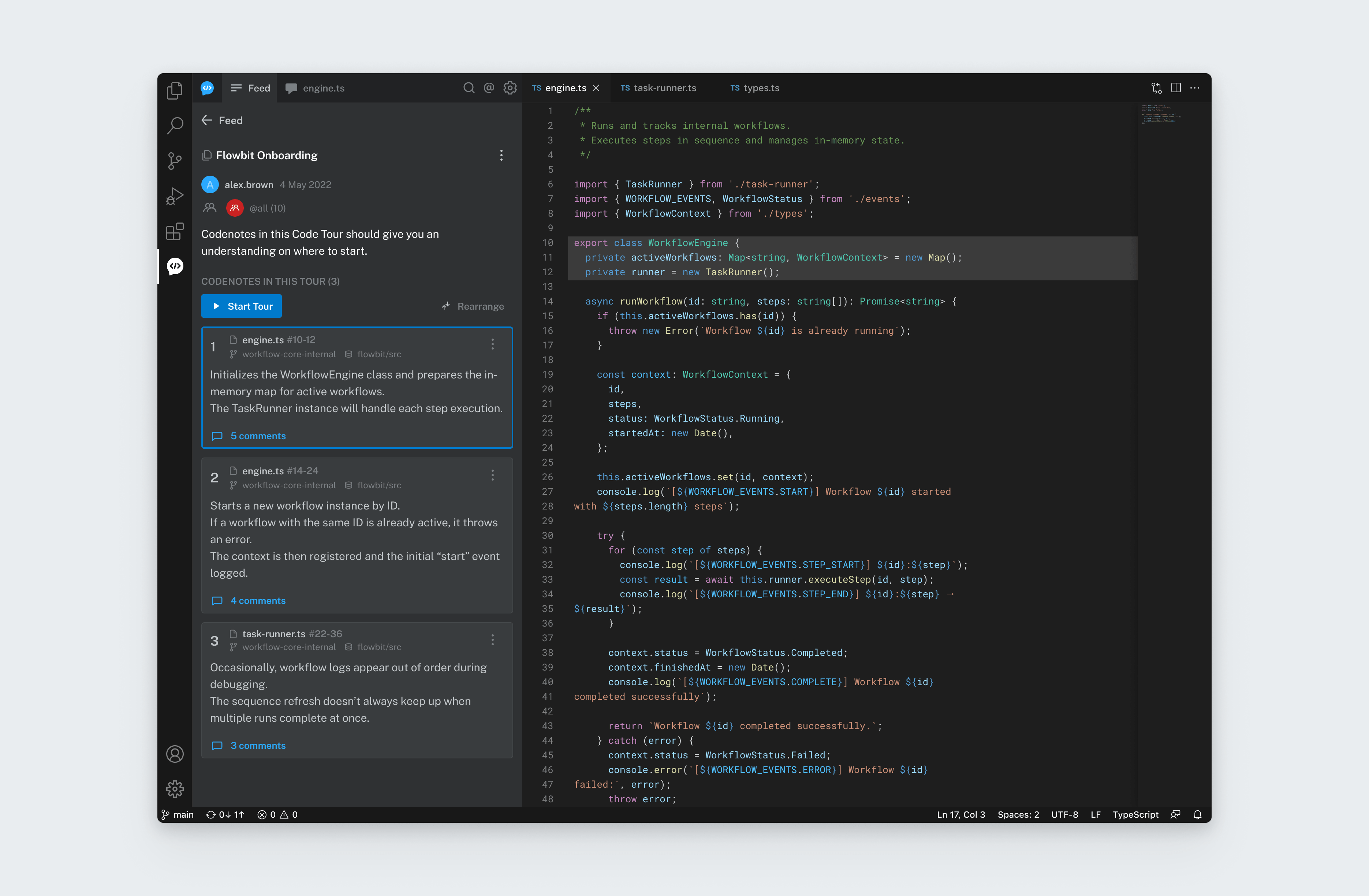
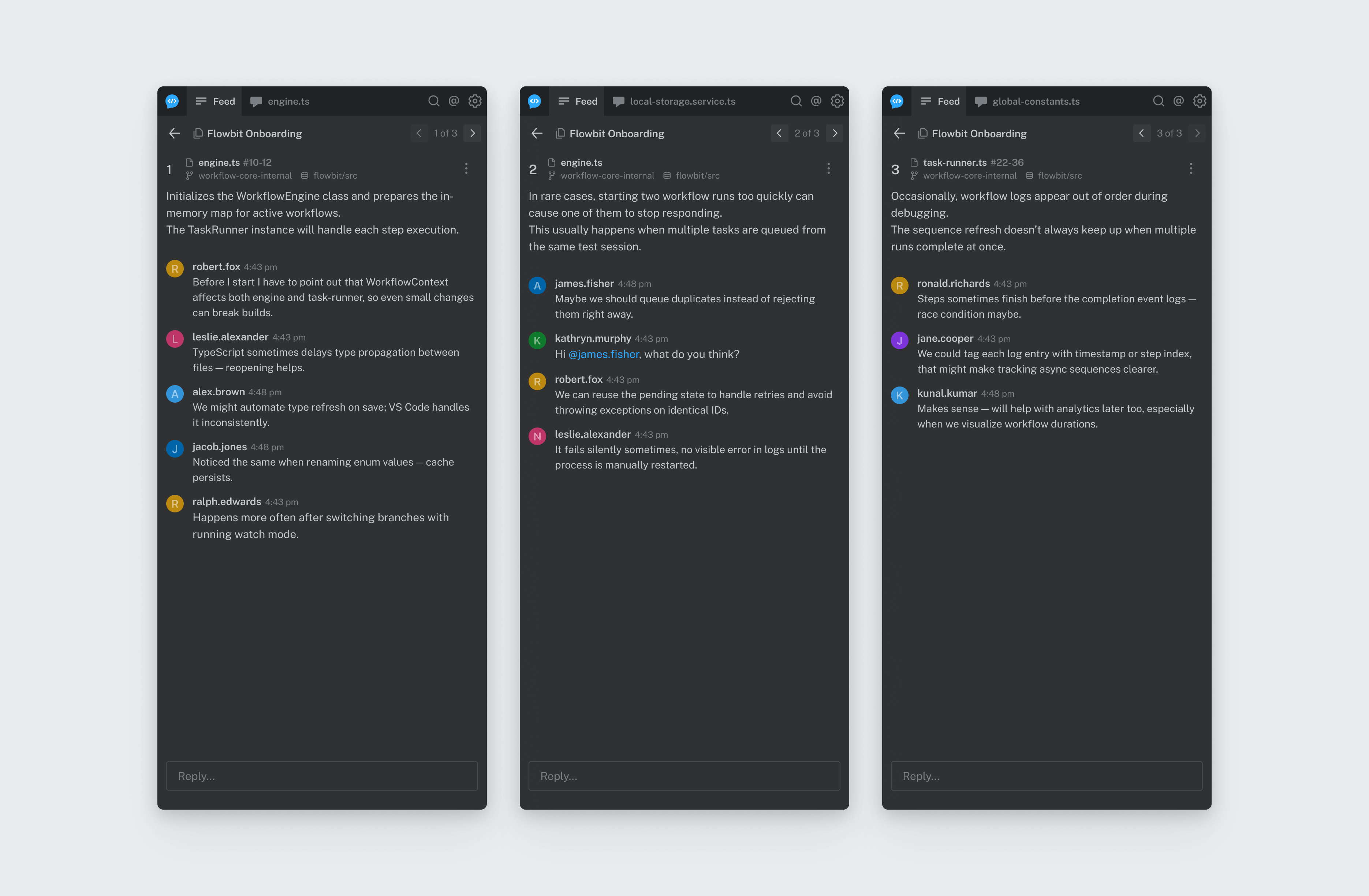
The first version focused on developer collaboration inside the IDE. Engineers could ask questions inline, start discussions around specific lines of code, and leave contextual feedback during reviews.
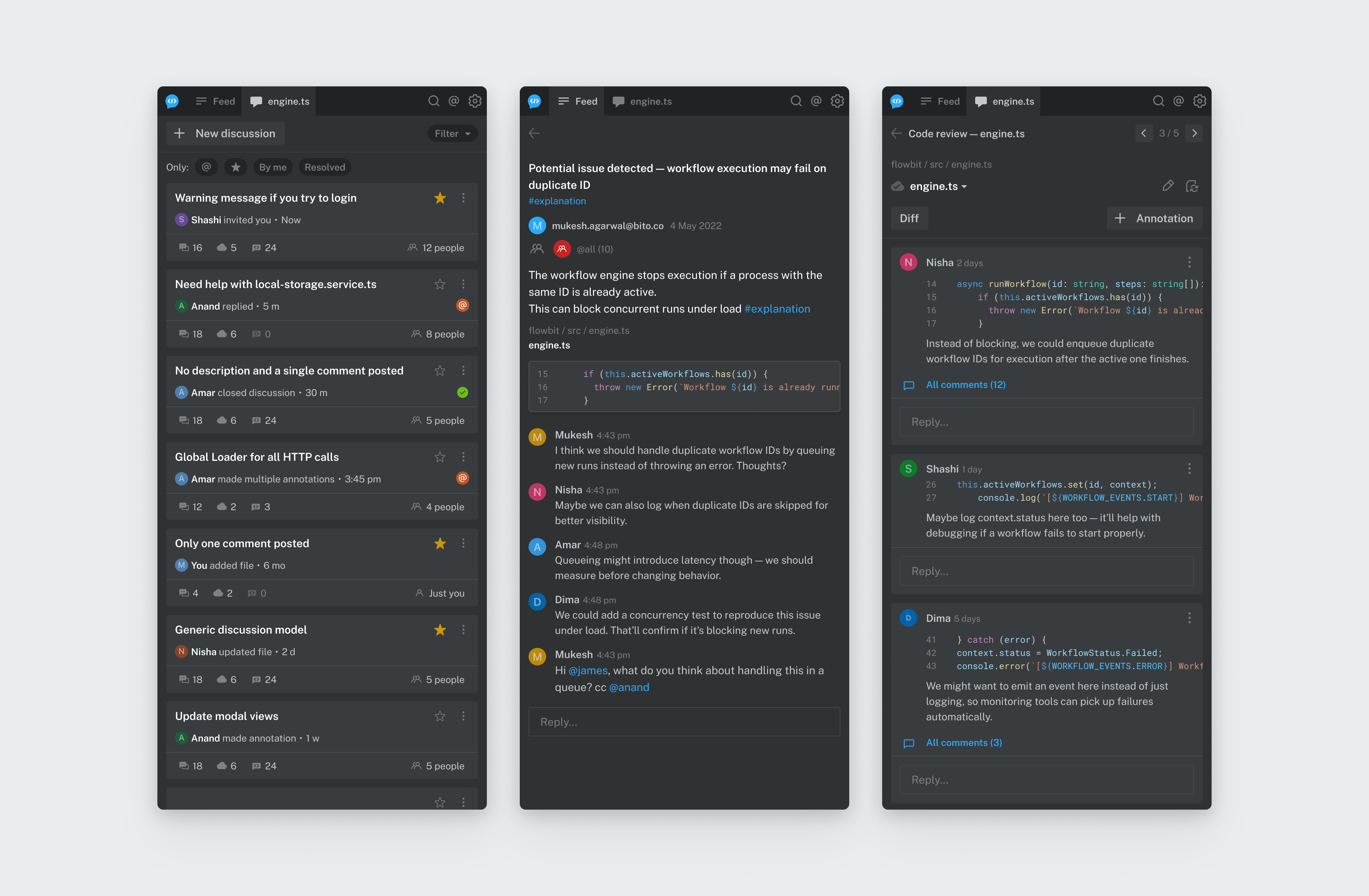
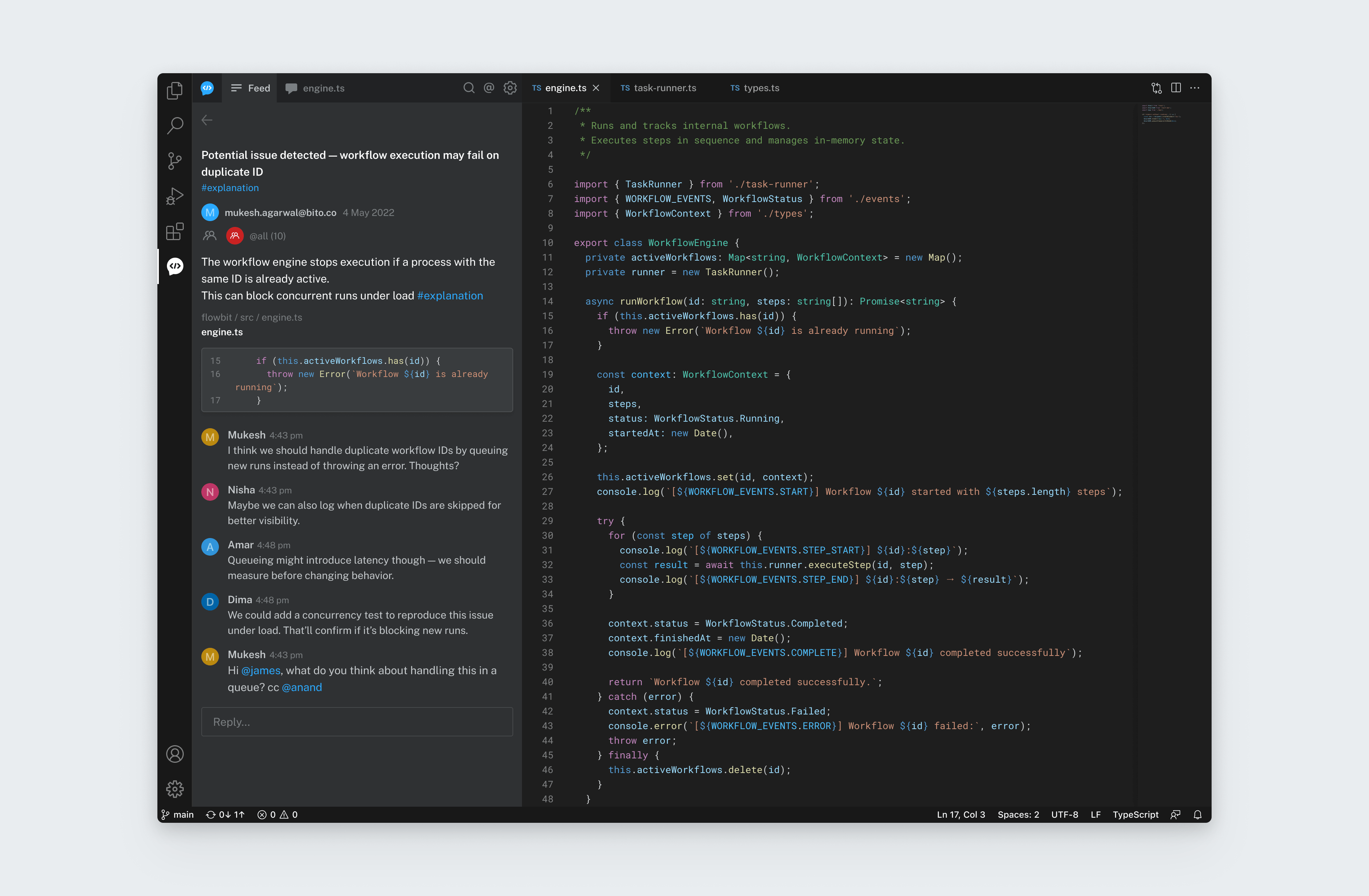
One standout feature was "code tours": step-by-step walkthroughs of the codebase that team leads could create to ease onboarding for new teammates.
Phase 2: expanding into AI-driven development
The December 2022 launch added code generation, bug detection, readability guidance, and performance suggestions. Before designing any of it, we interviewed developers across roles and seniority levels. Those conversations shaped two things in particular.
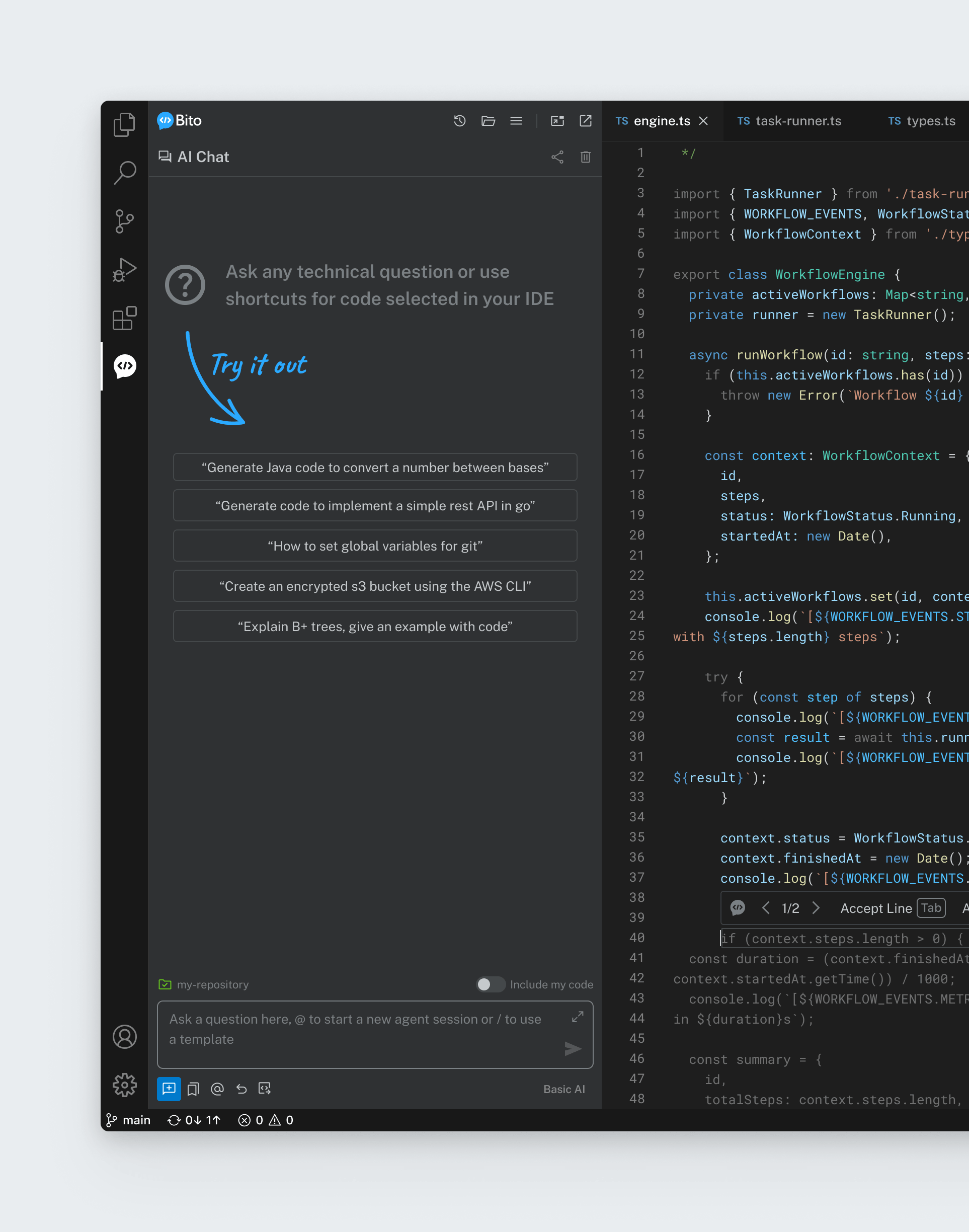
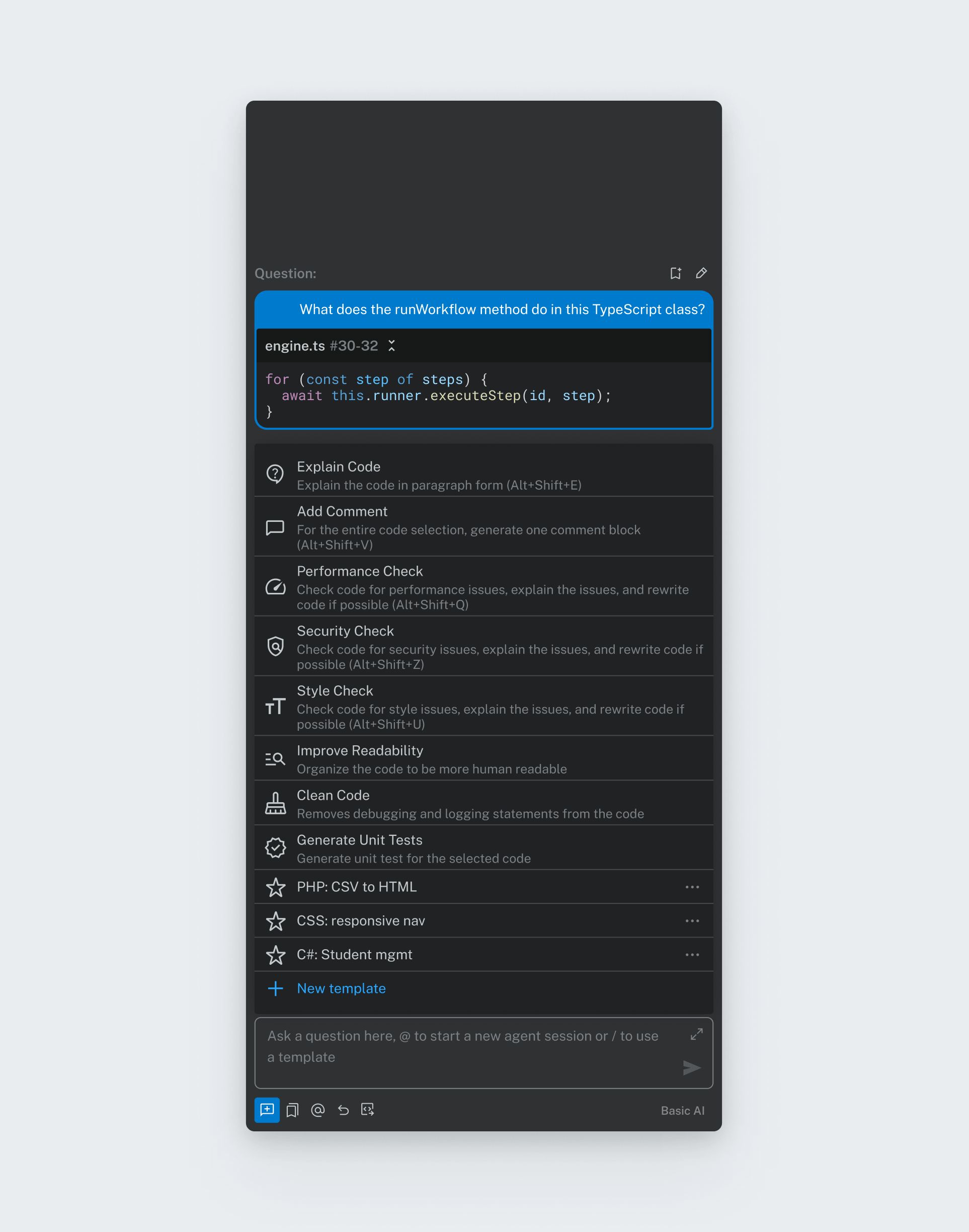
The first was shortcuts. Developers didn't want to type commands every time. Every developer we talked to had a slightly different command they wanted quick access to, and no two lists were the same. So we narrowed the default shortcuts to the handful that came up in almost every conversation, then built custom shortcuts so developers could map whatever else they needed themselves.
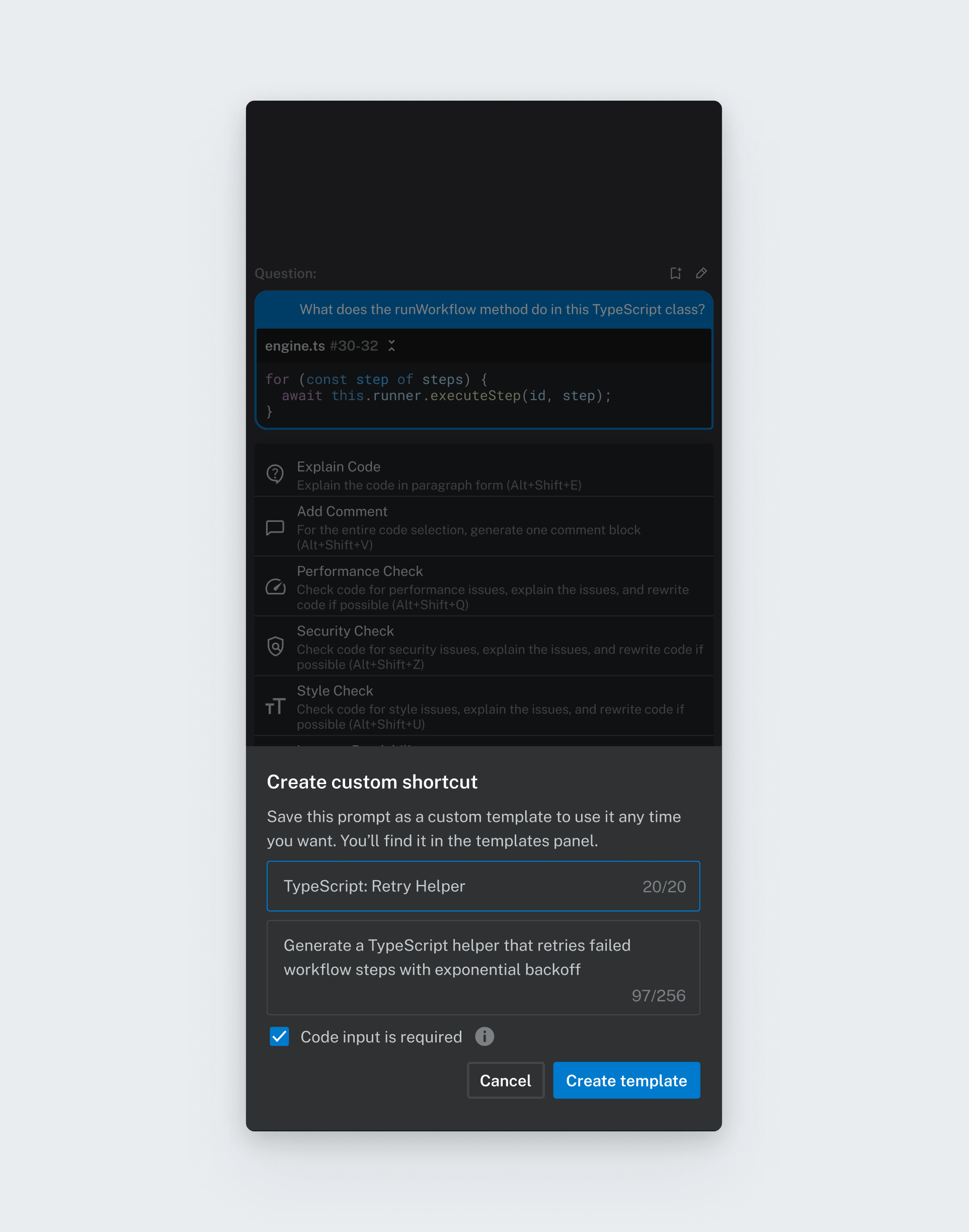
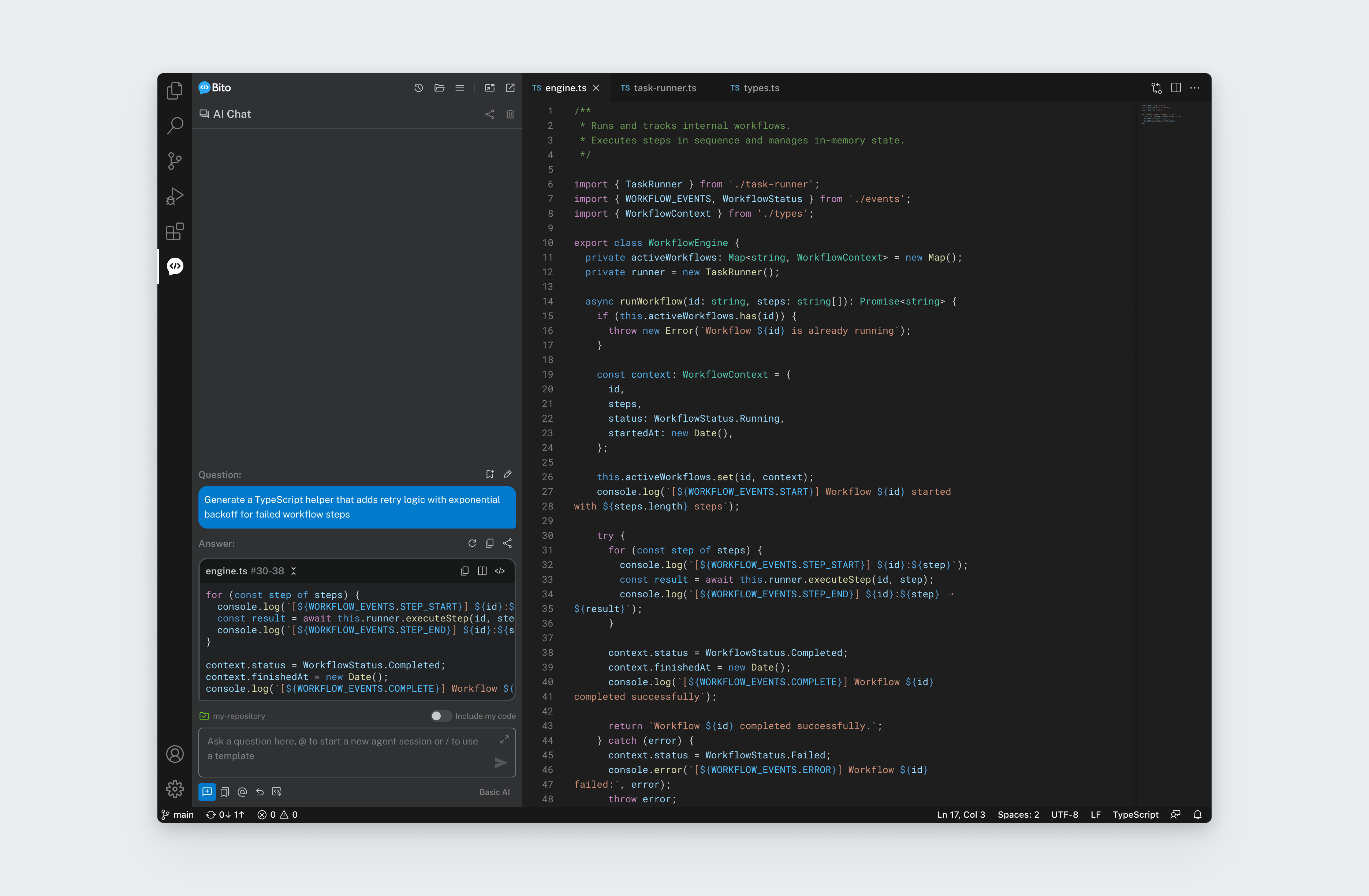
The second was the accept-and-apply flow. When Bito suggested changes across multiple files, the old approach meant hunting through each file manually, finding the right spot, and pasting the code in. We built a flow where developers could step through each suggestion one by one. Bito would open the exact file, place the change where it belonged, and show a diff view before anything was confirmed. Developers stayed in control of every change without doing the legwork.
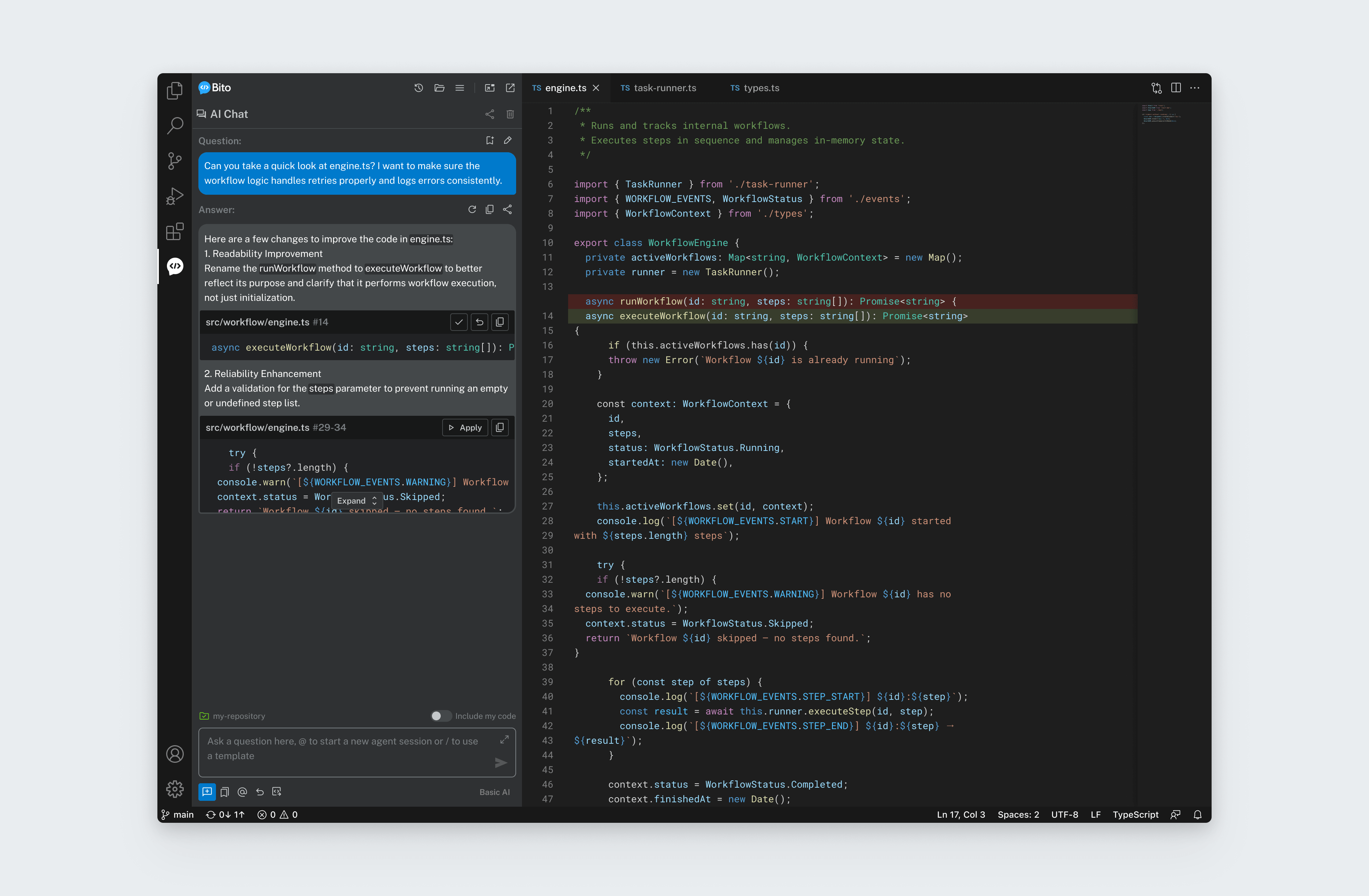
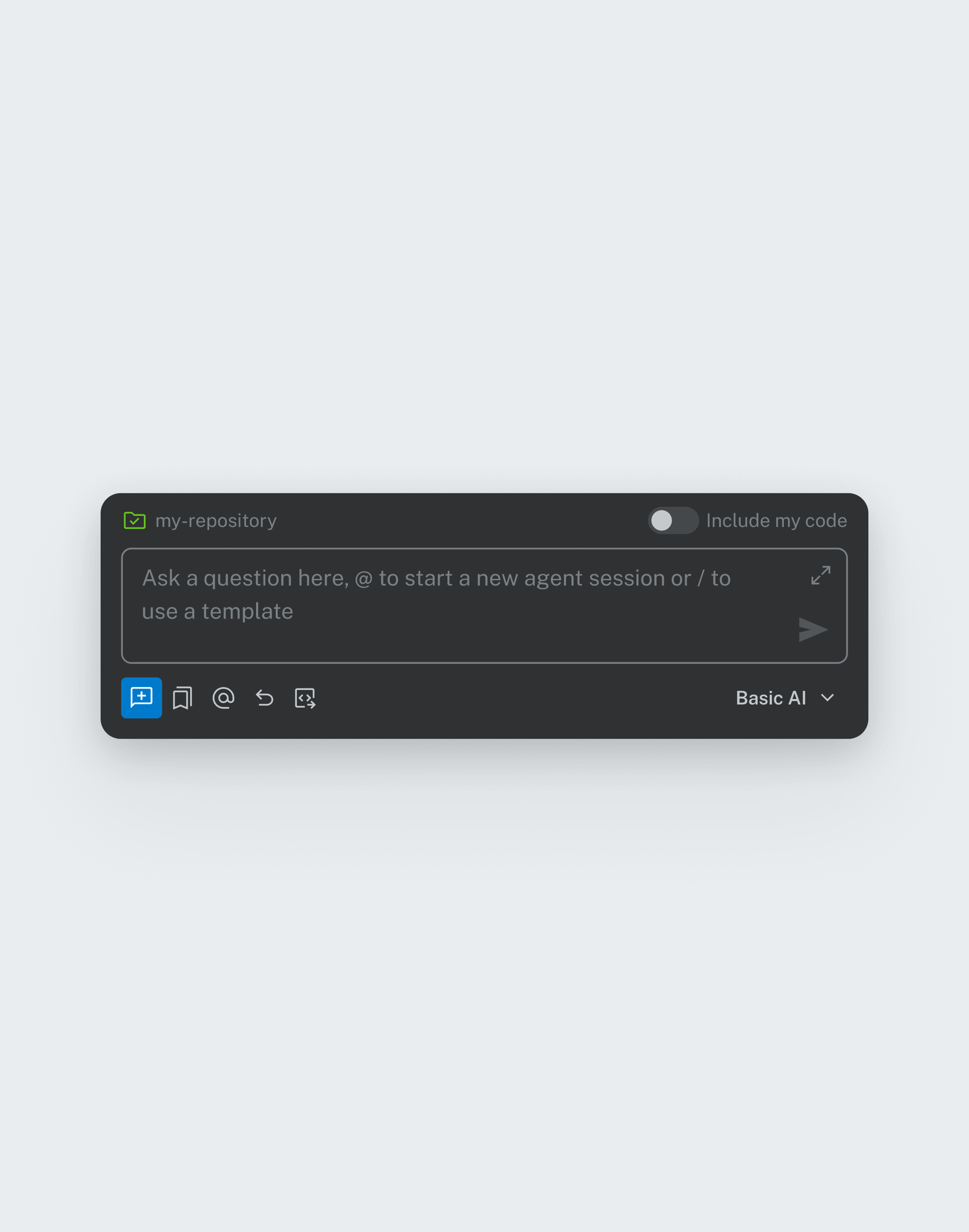
We also added small quality-of-life interactions throughout: a one-click action to bring back your last prompt, another to paste whatever code you had selected in the editor directly into the input field. Nothing dramatic, but the kind of thing developers notice on day two.
Phase 3: autonomous code reviews (2024)
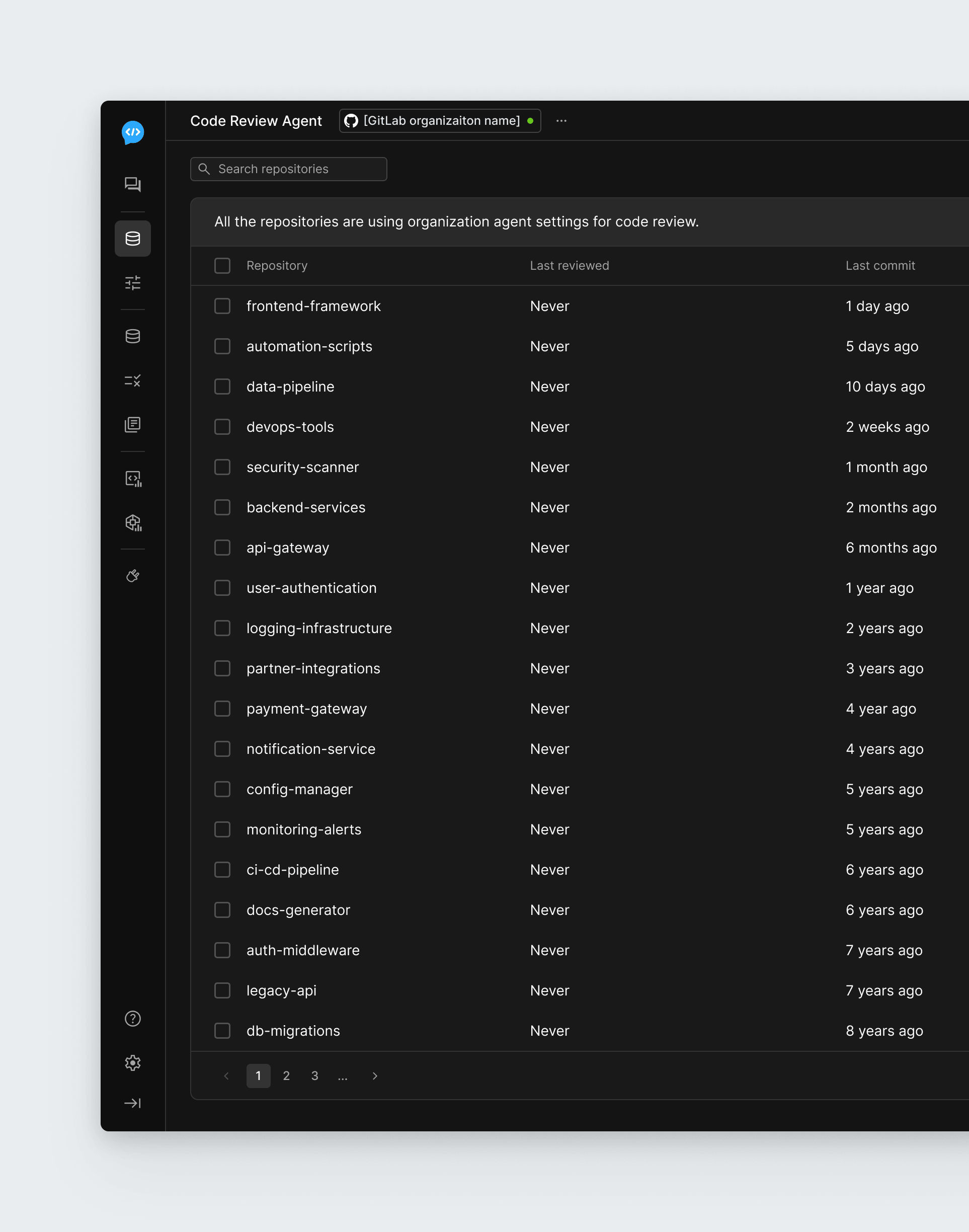
Bito's next milestone was the AI Code Review Agent, designed to automate reviews both inside the IDE and across GitHub, GitLab, and Bitbucket. Two very different design problems.
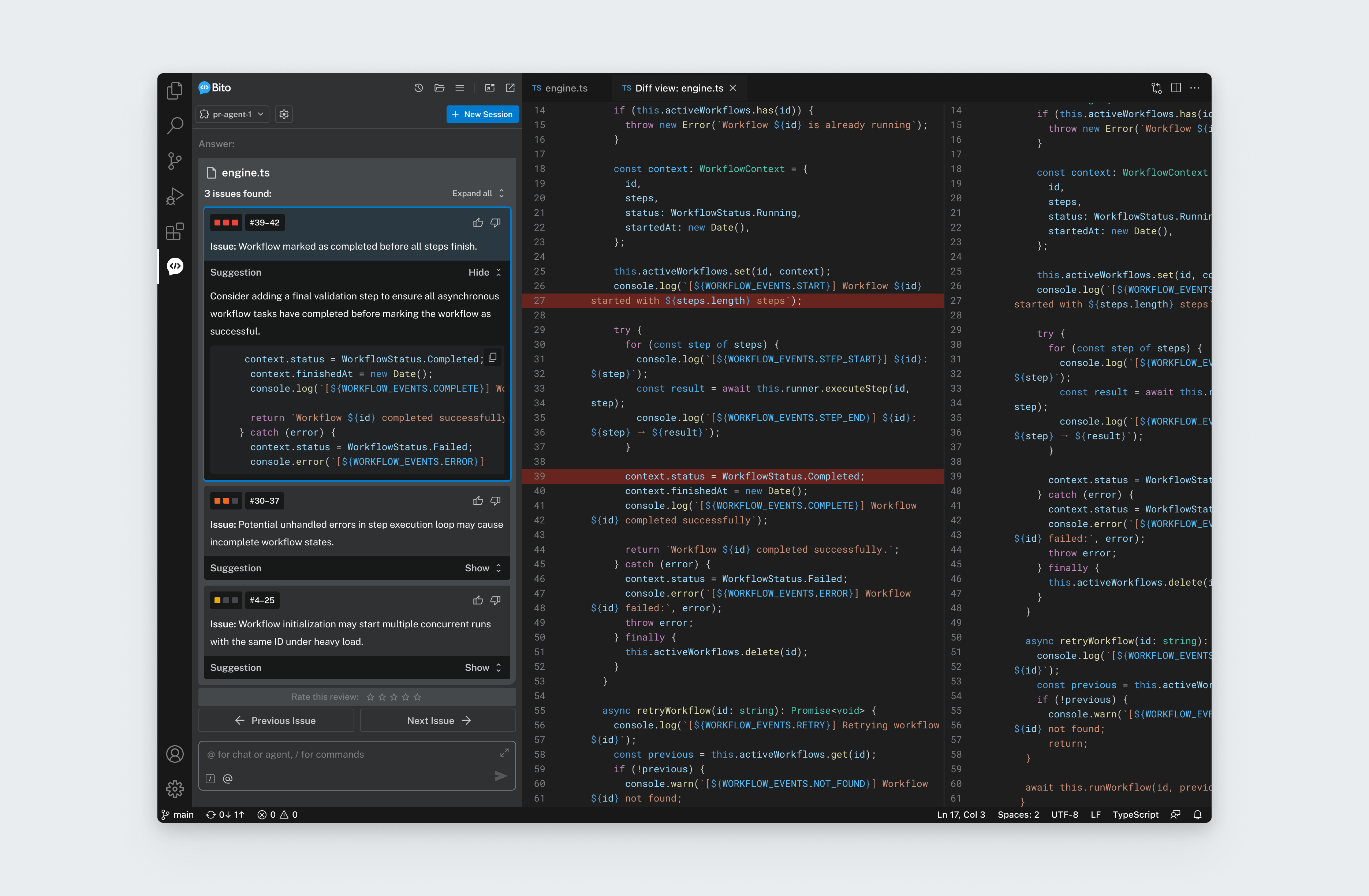
Inside the IDE, we built a dedicated review UI inside the Bito extension panel. Before opening a pull request, developers could run a review and see issues sorted by importance, right inside the panel. Each issue linked to the relevant lines, and the diff view opened in the IDE alongside it so nothing required switching context.
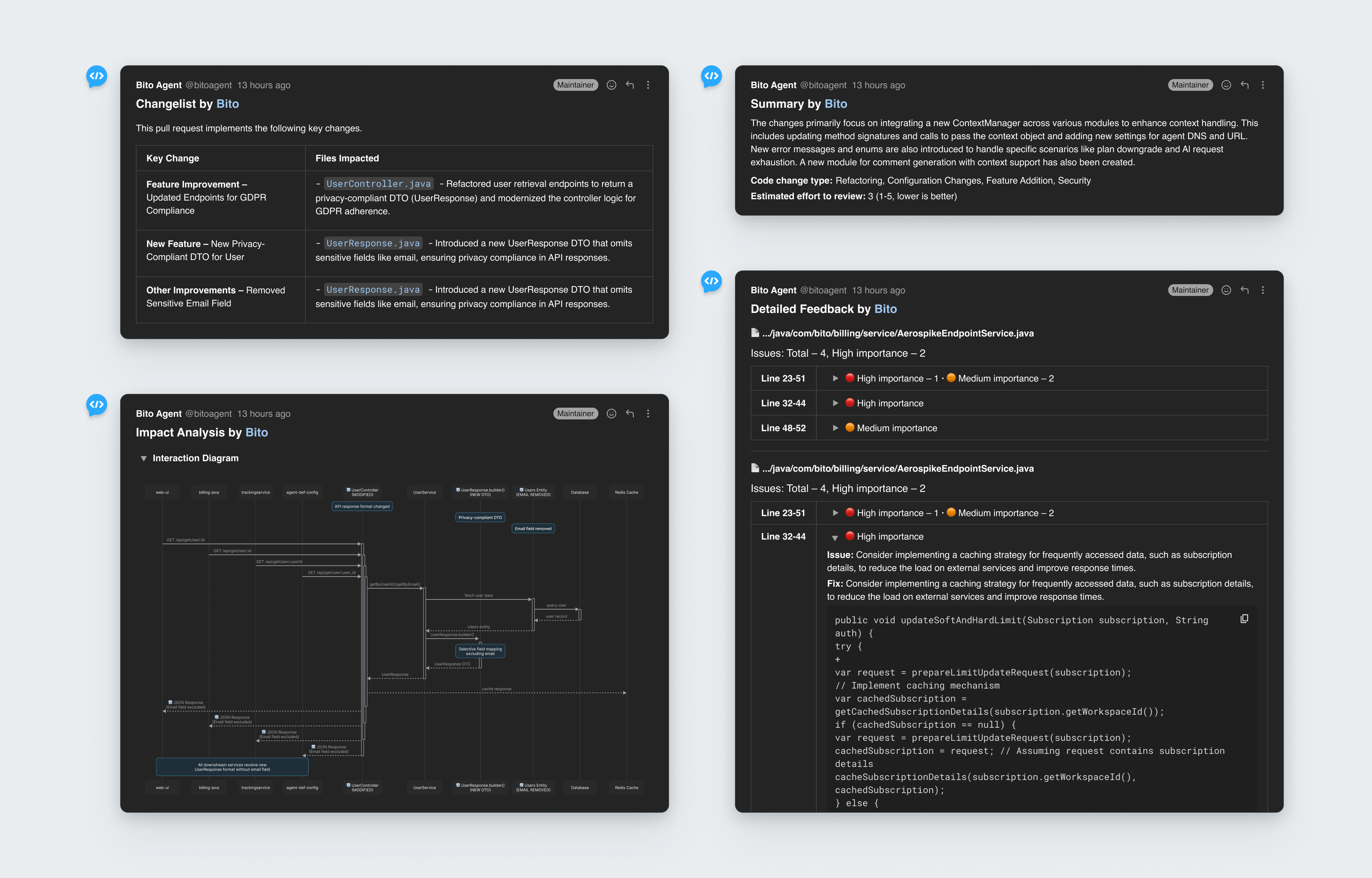
On GitHub and GitLab, we had no custom UI. Just Markdown. The entire design came down to text: how it was structured, where emphasis landed, what a developer's eye hit first when scanning a long review comment. We used heading hierarchy, severity labels, and tight grouping to make dense feedback readable at a glance.
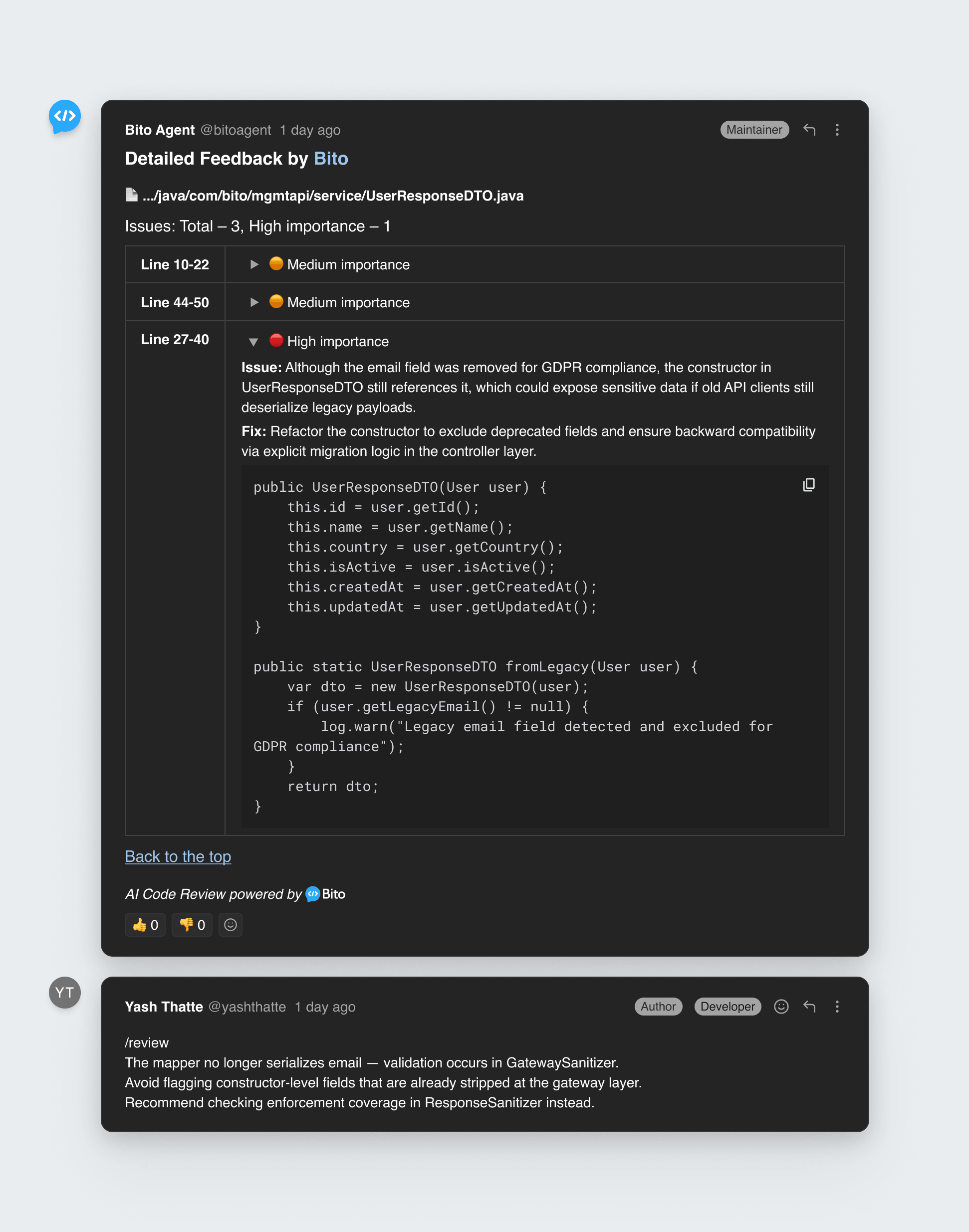
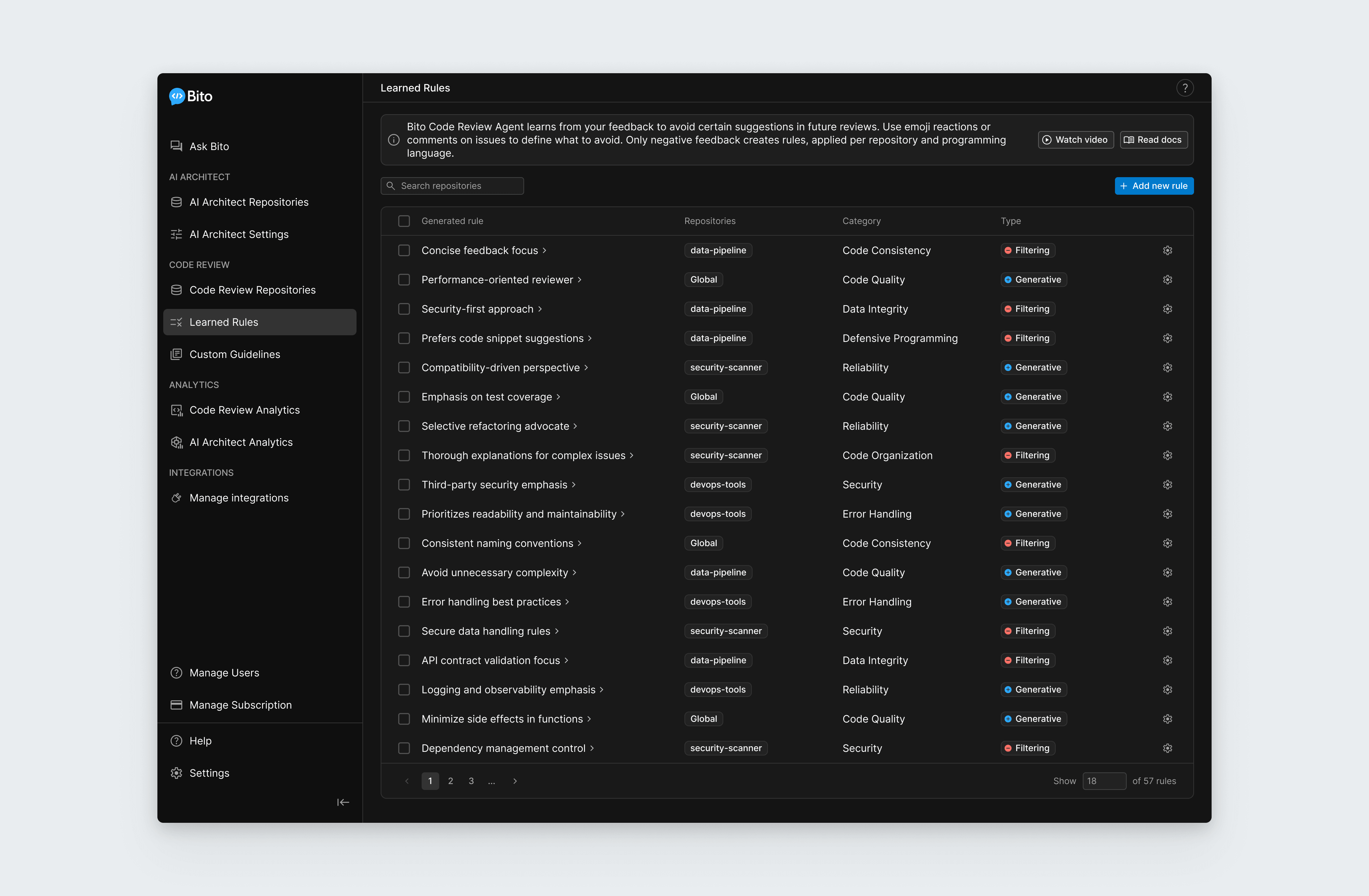
To make reviews more adaptive over time, we designed a feedback loop where developers could react to Bito's suggestions directly inside GitHub or GitLab. These reactions helped the system refine its recommendations for future reviews, aligning more closely with real-world team preferences.
The web platform
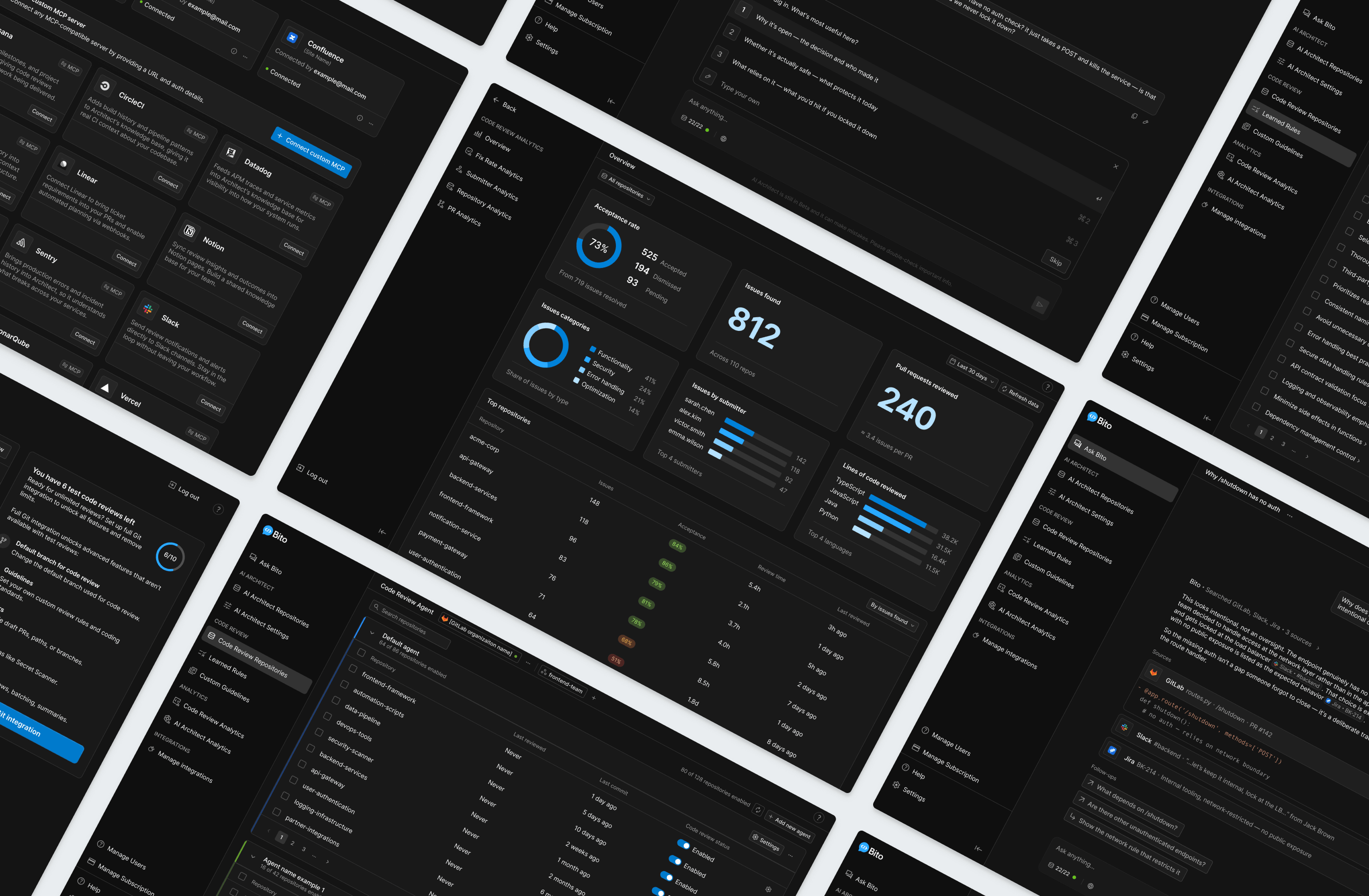
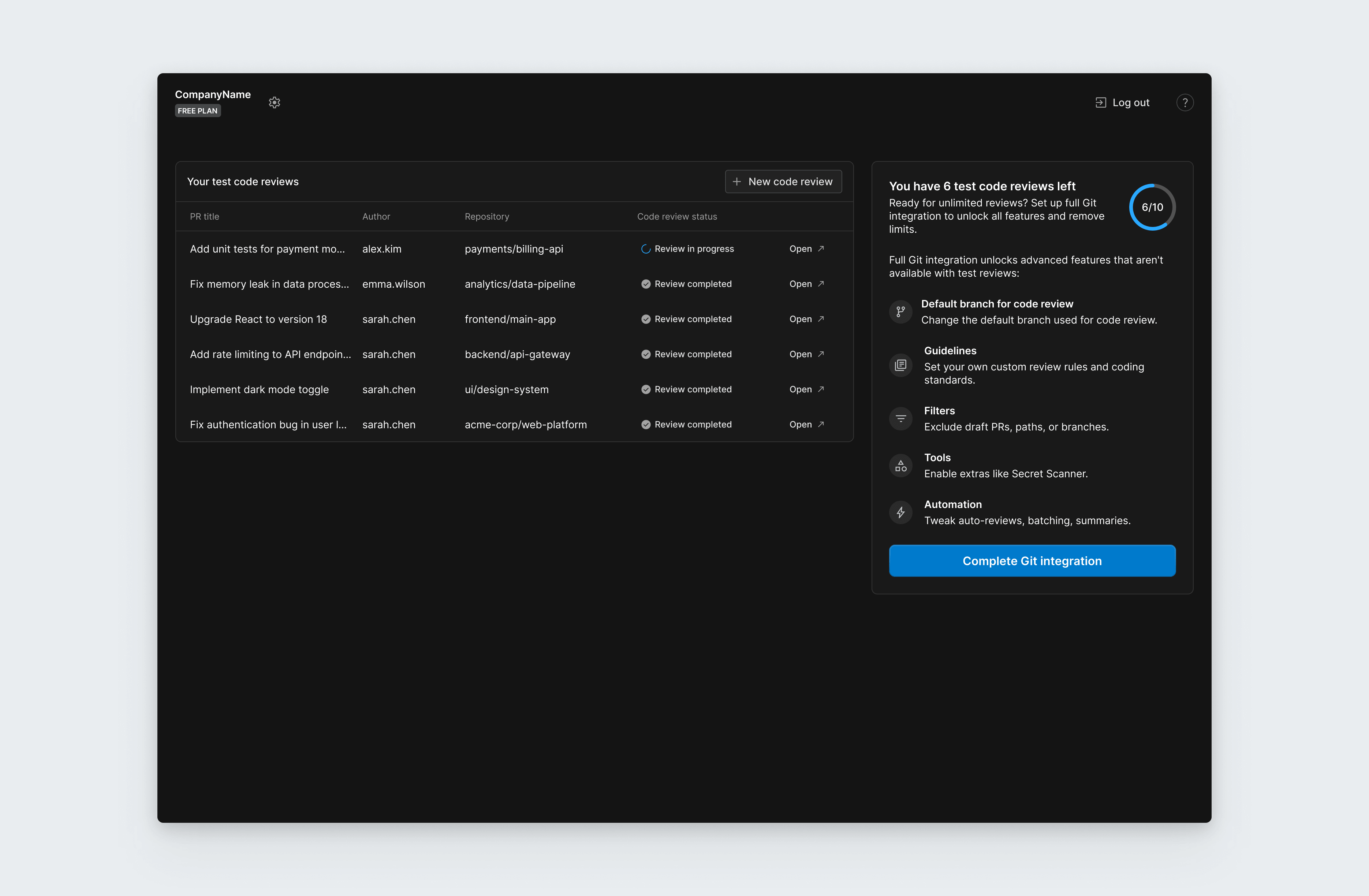
The companion web platform gave teams control over how the review agent behaved. Different agents for different repositories, each with its own filters and settings. The configuration UI had to handle real complexity without feeling like an admin panel, so we kept the information hierarchy tight and the most common settings front and center.
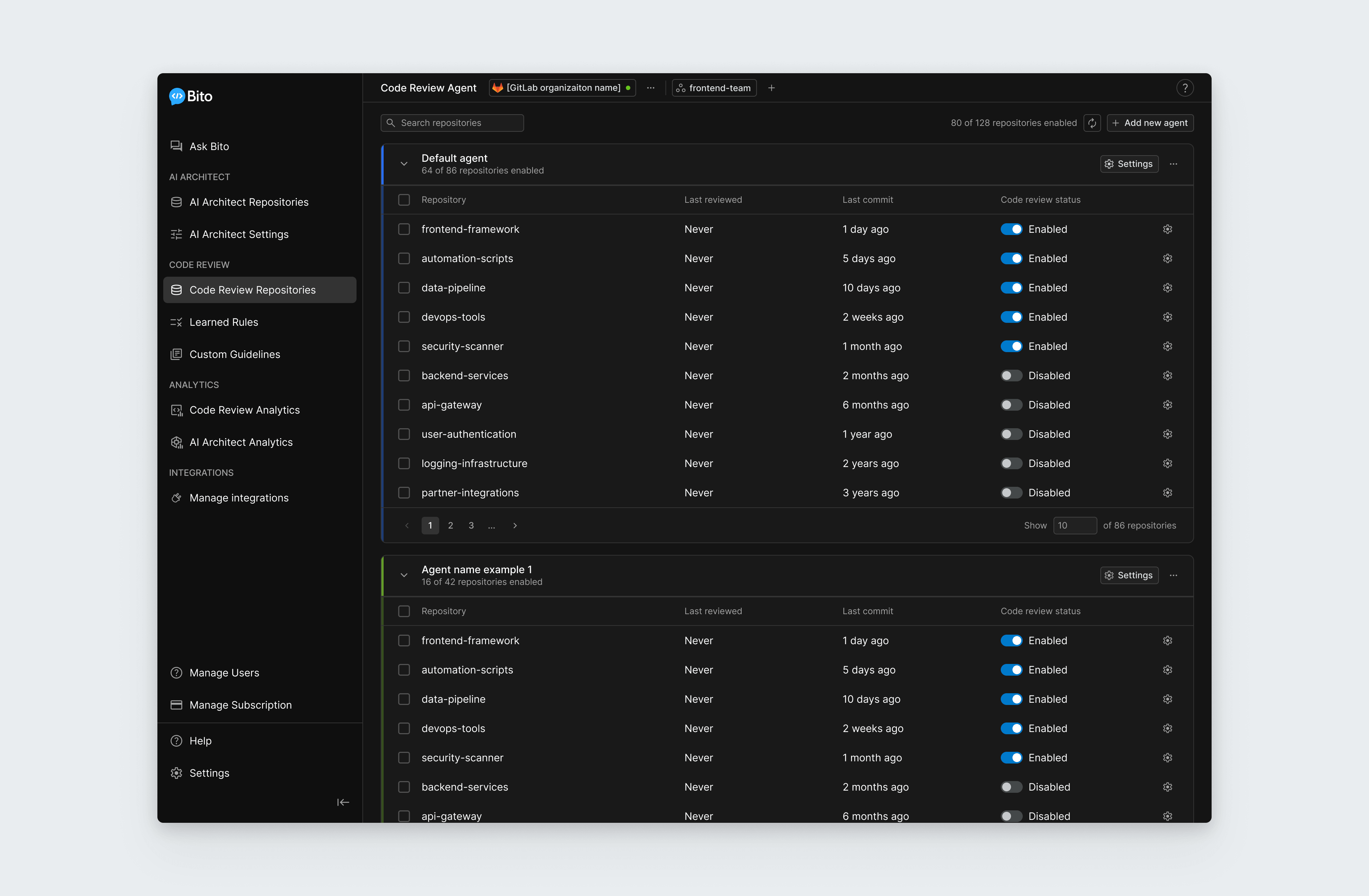
One of the most advanced features was support for custom guidelines. Teams needed to upload internal standards and have Bito actually follow them during reviews. We designed the upload and configuration flow so that translating a company's existing documentation into agent behavior required no technical setup, just upload, configure, done. A developer shouldn't need to think about how the rules get applied. They should just see them applied.
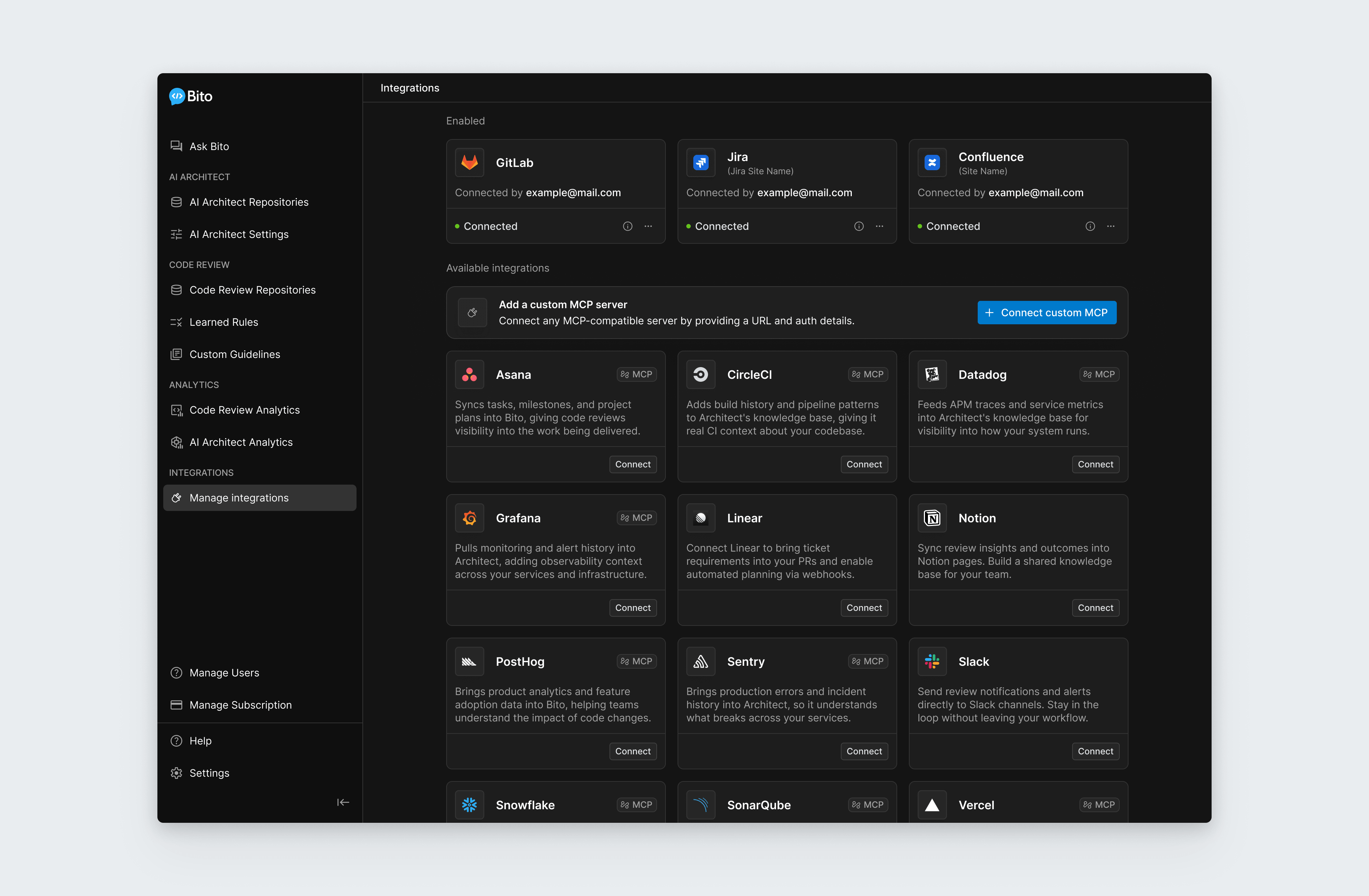
We also designed interfaces for Jira, Linear, and Confluence integrations, and a custom MCP configuration UI so teams could connect virtually any other tool themselves, without engineering help. Pick the tool, set the connection, done.
Ask AI Architect
We also designed a conversational interface for codebase exploration and feature planning. Developers could ask questions about how parts of the codebase worked and get answers grounded in the actual code. More usefully, they could feed in a ticket or a feature brief and get a concrete implementation plan back, a starting point before writing a single line.
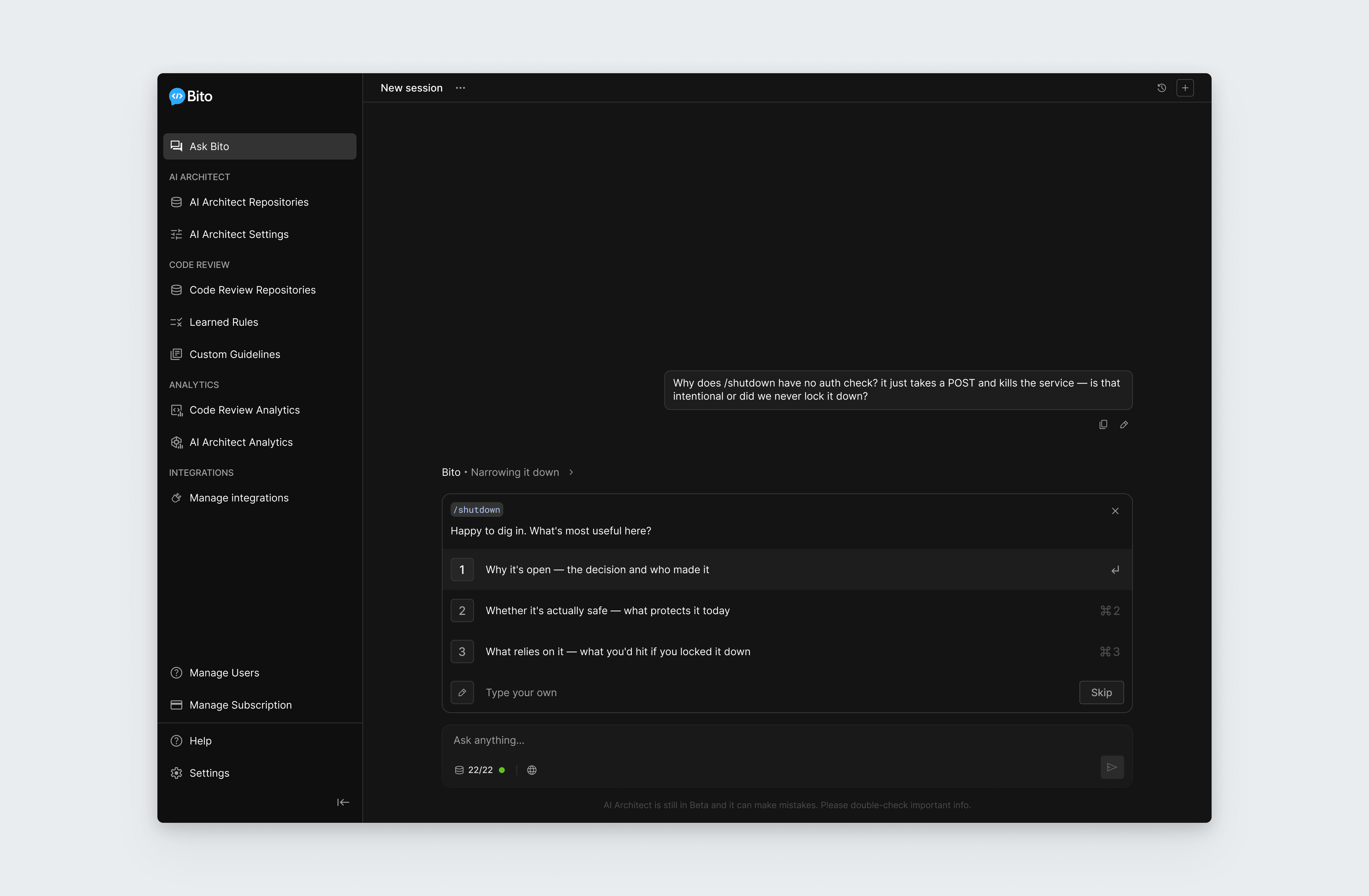
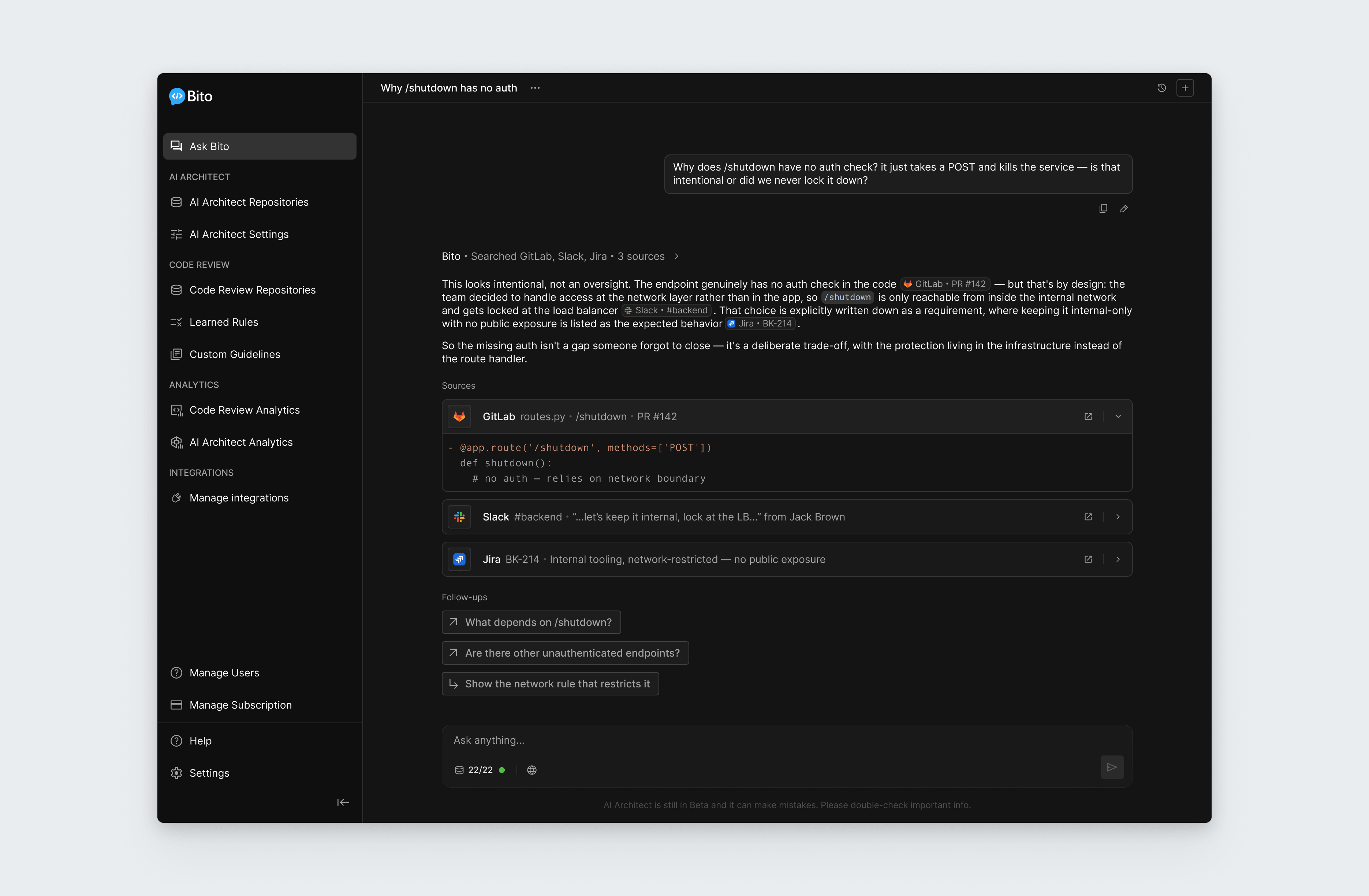
Every answer is traceable, and we designed it that way. Bito searches across connected tools like GitLab, Slack, and Jira, so we built an interface that surfaces each source inline, right next to the claim it supports, with click-through to the original. Developers can verify a conclusion without leaving the answer or losing their place.
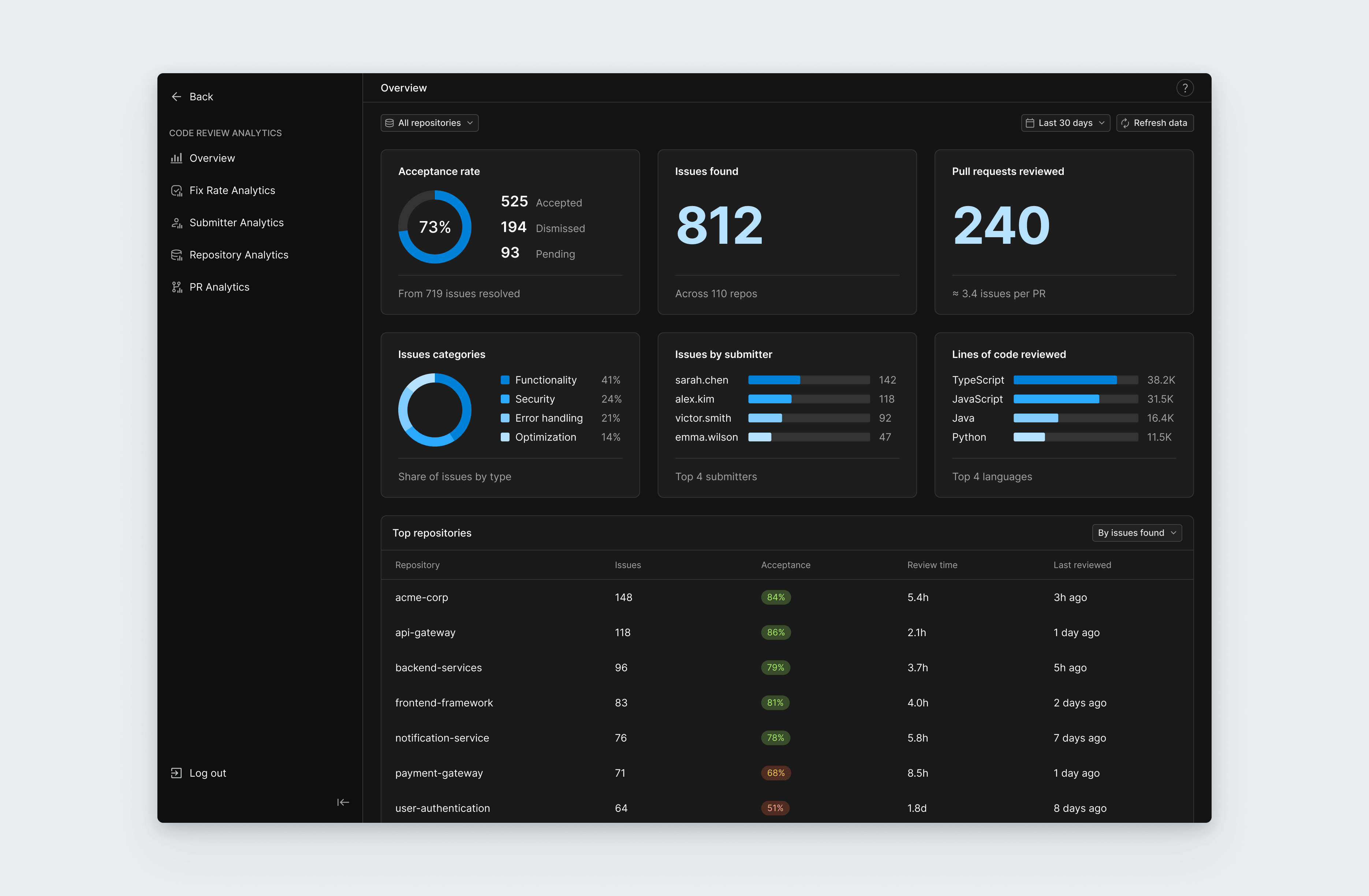
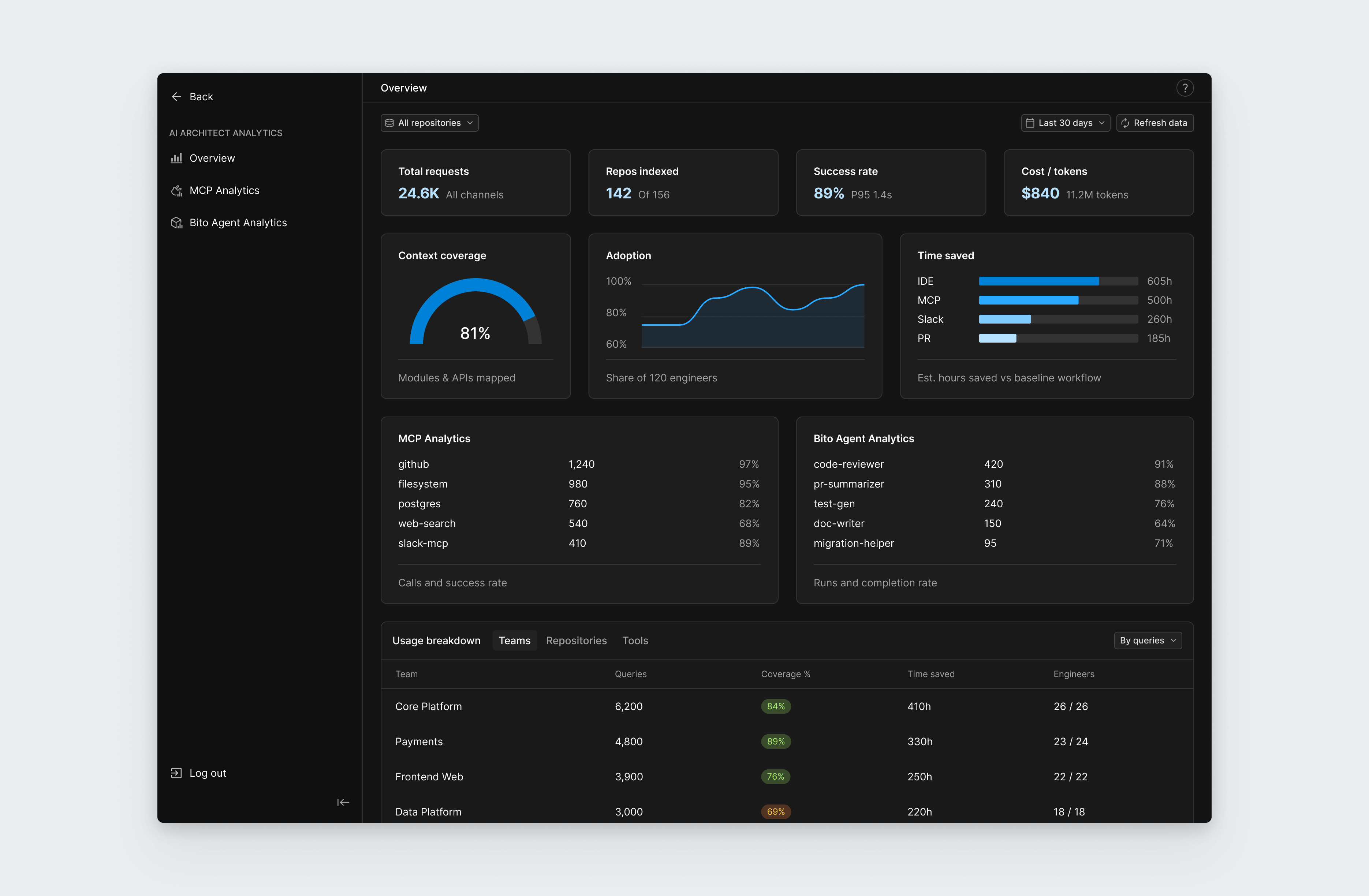
We also designed analytics views across the platform, giving teams a high-level read on how the agents are being used across their repositories.
Outcome & Impact
Over 3 years, Bito went through multiple pivots, each one introducing constraints we hadn't designed for before. We stayed close to the product and to Bito's own customers throughout, making sure feedback from real users translated into design decisions quickly.
Bito now serves over 150,000 monthly active developers and has processed more than 30 million AI requests. The company raised $3 million in 2023 and $5.7 million more in 2024.
We're proud to be part of the journey. And we're still building.
We're proud to be part of the journey. And we're still building.
That guys made a flash sprint and delivered affordable daily-routine tool for every warehouse workers.
Phil Morrow
Director Product Management, OATSystems, a division of Checkpoint Systems Inc.
Read the full review on Clutch.co