UI/UX design services for B2B companies building data-dense software
UI/UX design services for B2B companies that build and sell software people use all day. Dense, role-based workflows with more data on a screen than a consumer product shows. Audits, interface design and the design system behind them. Work can begin with one bounded piece and continue after the first phase.
B2B software we design
B2B SaaS and enterprise software with several roles, a lot of data and the processes a business runs on. Our projects fall into four groups.
Workflow and operations software
Software that runs requests, approvals, scheduling, logistics and other processes between teams. Each role sees its own part of the work and the next step.
Analytics and monitoring software
Dashboards and reporting screens where people follow the state of a business or a technical system over time and act on what they see.
Management and records software
Software for managing clients, properties, projects, assets and teams. Records, statuses and permissions sit at the centre of the interface.
Software for developers and AI products
Products for teams that work with code, data and AI models. People configure them, read logs and results, and use the output in their own work.
Data density in B2B SaaS interfaces
Every field on an operational screen is there for a reason someone can name. We keep the data the job needs and make the screen readable at full load, so people can find information and actions where they expect them.

B2B SaaS interface redesign challenges
Four situations bring software teams to us. Each one shows up differently in the product, in sales or in support, and each has its own starting point.
The interface no longer keeps up with the product
Every release adds features, and the interface becomes less consistent across modules. New screens take longer to design and build. We bring all of it under one system without starting from zero.
Deals stall on the product demo
Buyers compare products in a demo, and an outdated interface can make a capable product look behind its competitors. We start with the screens your sales team shows first.
Onboarding takes too long
Customers need a long training period, and the same questions keep reaching your support team. We find the steps where users get stuck and make them the priority of the redesign.
You deliver software for a client and need design depth
Integrators and software partners bring us in when a delivery needs more UI/UX depth than their own team has. We work as the design layer inside your delivery, under your process and your brand.
What B2B UI/UX design services include
UI/UX design services usually start with an existing product, workflow or defined product area. We look at where your product is today and put together the design work it needs, from one of the pieces below to all of them.
UX audit of the software product you have
We map the key flows and check how each one is built: its steps, screens and the decisions behind them. You get a list of what to fix and in what order, shown on your own product.
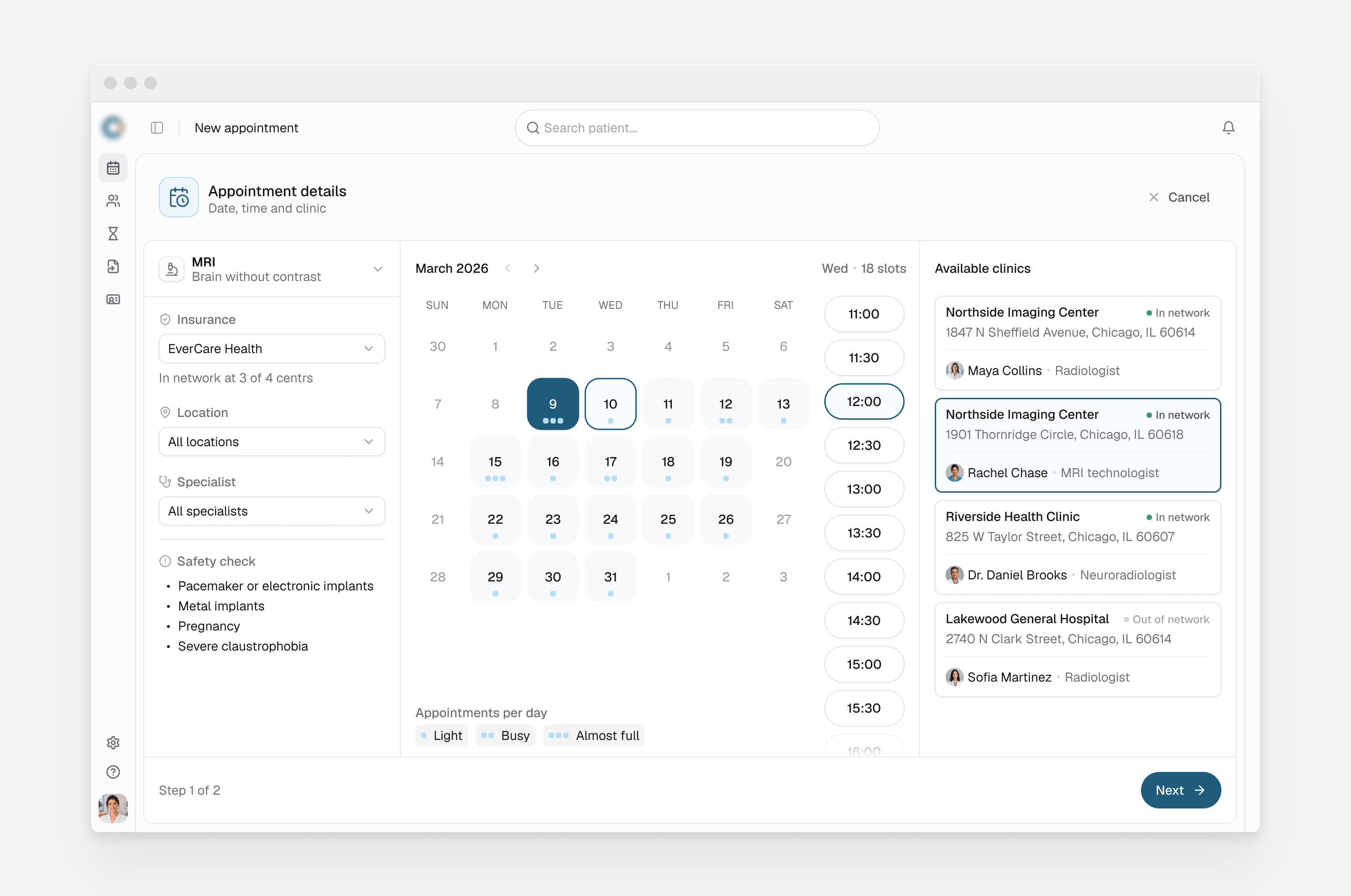
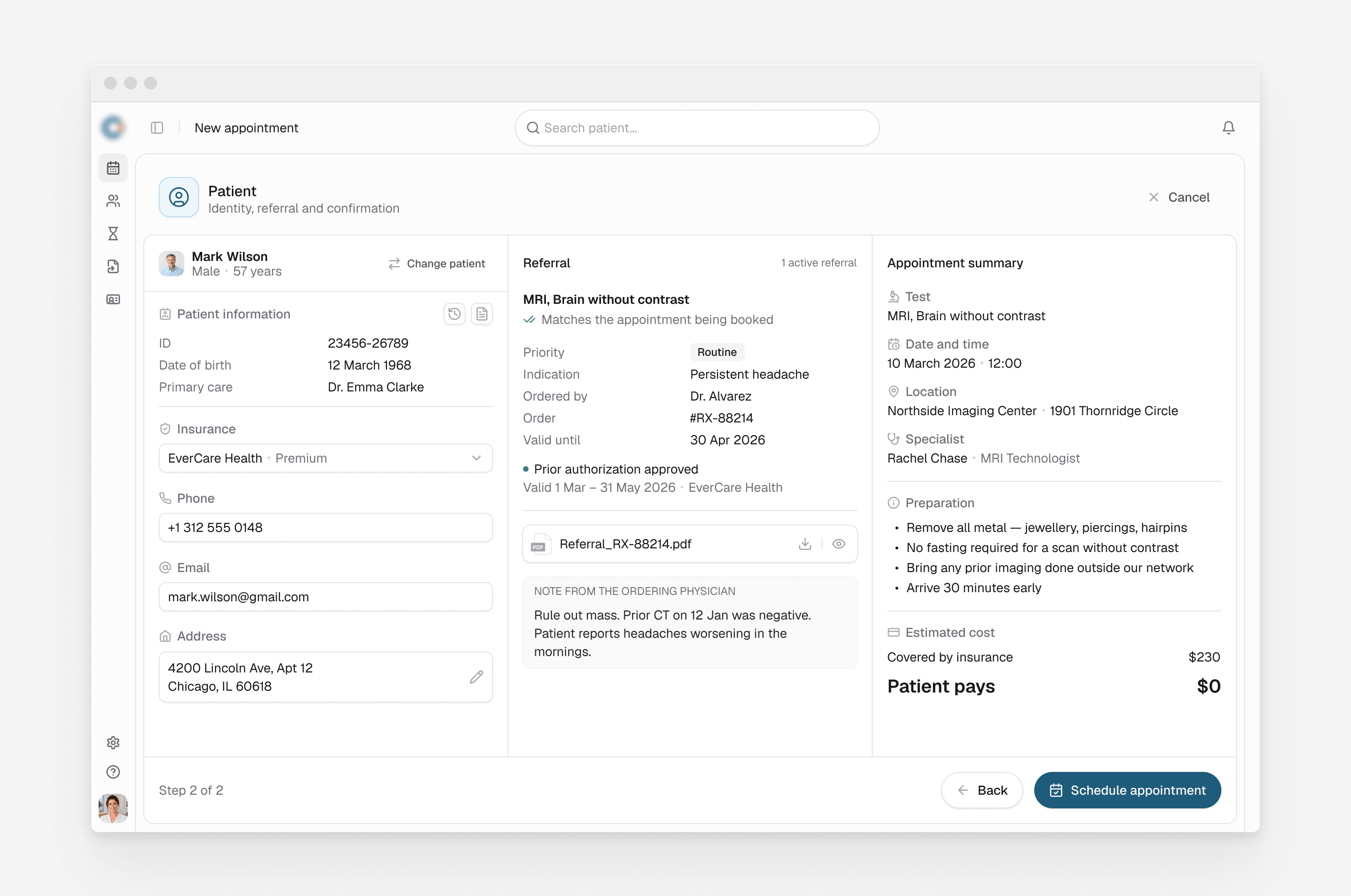
Interface design for the screens people use daily
We redesign the screens people rely on in their daily work, against the data model you already have. Roles and permissions shape the layout, and every state is documented for the build.
Interactive prototypes
HTML or Figma prototypes that match the design, with placeholder data. Your team, your customers and your sales can go through a flow before it is built.
The design system your team extends
Components, tokens, states and usage rules structured in Figma, with a handoff detailed enough to build from. New screens land inside the system after we leave.
Continuing design capacity
After the first phase, design continues in regular cycles. The amount of work goes up or down with your release plans and priorities.
UI/UX design process, from audit to handoff
The same four steps apply to a live product and to an interface being brought back under one system. Each phase ends in files and prototypes you keep, and we set the pace together with your roadmap.
Audit of the screens you already have
We go through your product together with your team, in each user role, and note where the work slows down. The result is an agreed list of priorities.
Redesign cycles on priority flows
The flows agreed in the audit go into redesign. Each cycle produces high-fidelity mockups that look real from the first review, plus interactive HTML or Figma prototypes.
Interface and design system delivered together
The redesigned screens arrive with the components and rules they are built from. Your team can later move the remaining parts of the product onto the same base.
Handoff to your front-end team
Annotated specs, component notes and a map from old screens to new ones let the change go out in stages. Your developers reach us in Slack for the whole build.
Selected UI/UX design work
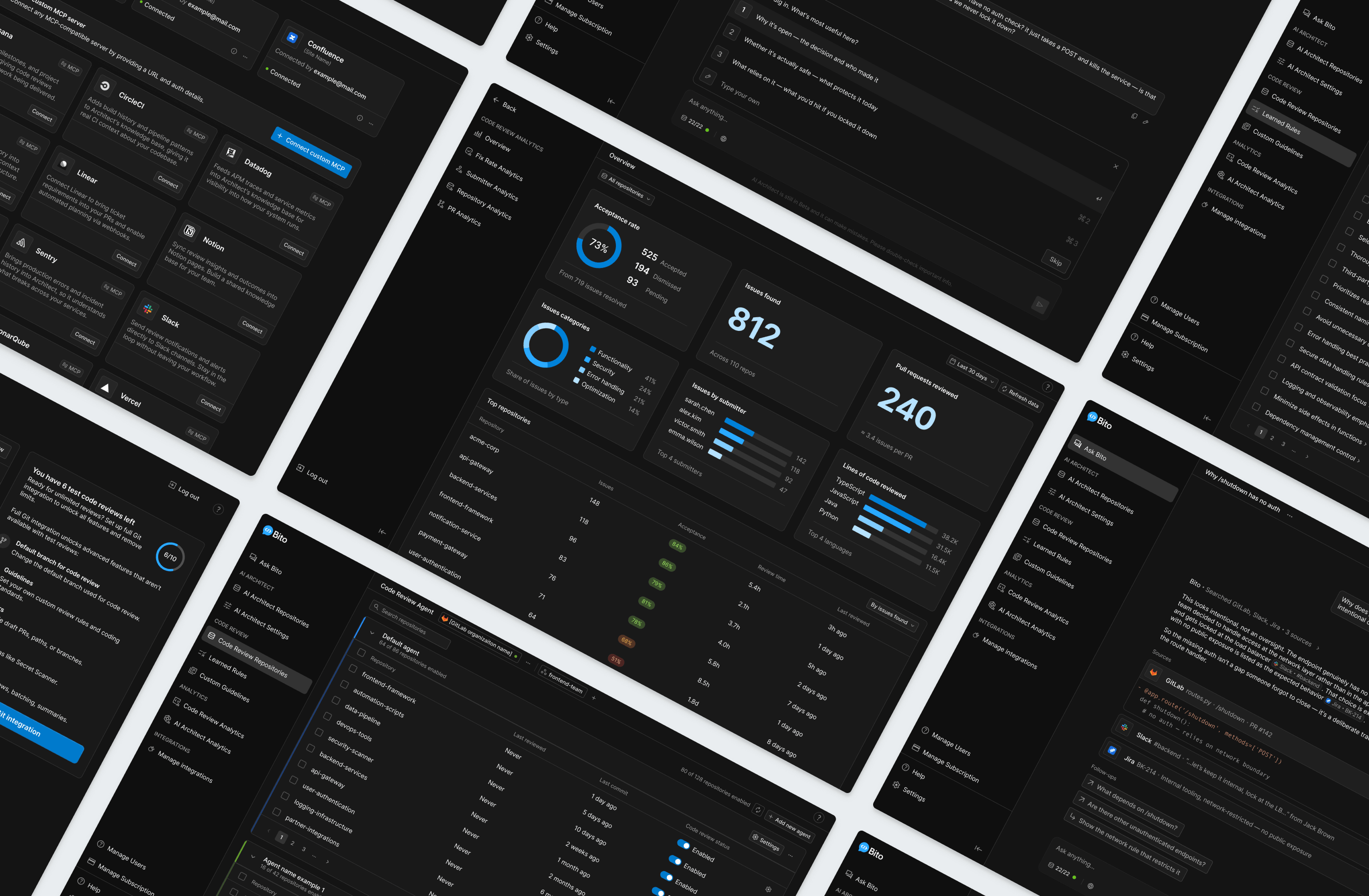
UI/UX design for Bito’s AI developer platform
Bito’s AI developer platform, designed with Redbrix since April 2022: IDE workflows, AI code review and a shared design system.
Dmitry is like a product owner rather than a designer.
His approach to design was from the product perspective.
What changes after UI/UX design for B2B SaaS
Results depend on the product, its stage and its market, so we agree what to measure before the work starts. Pricing, missing integrations and missing features also make users leave, and design does not fix those. We say so at the start.
The interface becomes a reason people choose the product
On one platform we have designed since 2022, 82% of new clients name the UI as a deciding factor in choosing it.
Onboarding can get shorter
New users can learn the product faster, with fewer support requests about where things are or how a screen works.
Developers can build new screens faster
New screens are assembled from a documented component set, and developers need a designer less often.
The product can feel consistent
Screens built by different people at different times follow the same rules, and moving between modules feels like one product.
Why software companies work with us
Redbrix is a small team that stays with a product for years and works directly with the developers who build it.
One product, designed since 2022
We are the long-term design team for one B2B platform. Its interface has been reworked step by step while its customers kept working in it.
Founders on the project
Redbrix has been operating since 2017. The founders take part in the project, and the designers you meet on the first call do the work from the audit to handoff.
Close work with your developers
We review technical constraints with your developers before design starts, and stay in the same channel through implementation.
Redbrix is an exceptional company, they understand our needs.
Where a UI/UX engagement starts, and what it costs
Cost depends on scope and product size, so we publish starting prices. Exact scope and price are agreed on a call before work starts.
3-day trial
For selected projects, we can start with three working days on a bounded part of the product. The goal is to show how we approach the problem and give both sides a low-risk way to assess the fit before a larger engagement.
UX audit from $1,900
The scope depends on your product and ranges from a few key flows to all of it. A typical audit takes one to two weeks and costs $1,900 to $4,000. You get a flow map and a prioritised list of fixes.
Monthly retainer from $4,000
Design capacity at an agreed cadence, billed monthly and adjusted as your roadmap changes. Larger volumes are priced from this starting point. Longer engagements often use this model.
Project work, T&M or fixed price
A first phase on a B2B SaaS product typically runs three months and starts at $24,000. With a specification or design documentation in hand, we can quote that phase at a fixed price.
FAQ
Redbrix provides UI/UX design for B2B companies that build and sell software. Our projects include workflow and operations software, analytics and monitoring software, management and records software, software for developers and AI products. Manufacturing and ERP software is described on our ERP UI/UX design page.
Yes. Redbrix designs B2B software with several user roles, dense data and multi-step workflows. The four groups of products at the top of this page show where that work happens.
Yes. Redbrix designs dashboards and analytics screens as part of the product. They use the same design system as the rest of the interface.
A UX audit at Redbrix is a review of your product with real data and in the roles that use it. We map the key flows and check the steps, screens and decisions each one is built on. You get a list of what to fix and in what order. The scope follows your product and its current state. A UX audit can cover a few key flows or the whole product, and can incorporate existing user research or product data when available. It usually takes one to two weeks and can be ordered on its own.
The price depends on scope and the size of the product. At Redbrix, a UX audit costs $1,900 to $4,000. A monthly retainer starts at $4,000. A first project phase usually takes about three months and starts at $24,000. We agree the exact scope and price on a call.
At Redbrix, a UX audit takes one to two weeks. A first project phase usually takes about three months and covers the core flows, the screens in scope and the design system behind them. After that, the work can continue as a monthly retainer, with the volume adjusted as your roadmap changes.
Look at work on products similar to yours, ask who will do the work and how the team works with your engineers. Start with a bounded piece, such as a UX audit or a trial, and judge it on your own product.
Yes. Redbrix extends your design system with the components and states new screens need, and we document every change. We also point out where parts of the system have drifted apart and agree with you what to align first.
Redbrix reviews technical constraints with your developers before design starts. Handoff includes annotated specs, component notes and a map from old screens to new ones. Your developers can reach us in Slack throughout the build.
Redbrix rolls a redesign out in stages. We map old screens to new ones, so each release is usable on its own. Users meet the new interface in the flows they already know.
For selected projects, Redbrix works on one bounded part of the product for three working days. The trial is meant to show our approach on your actual product before a larger engagement is considered. Availability depends on the project and scope.